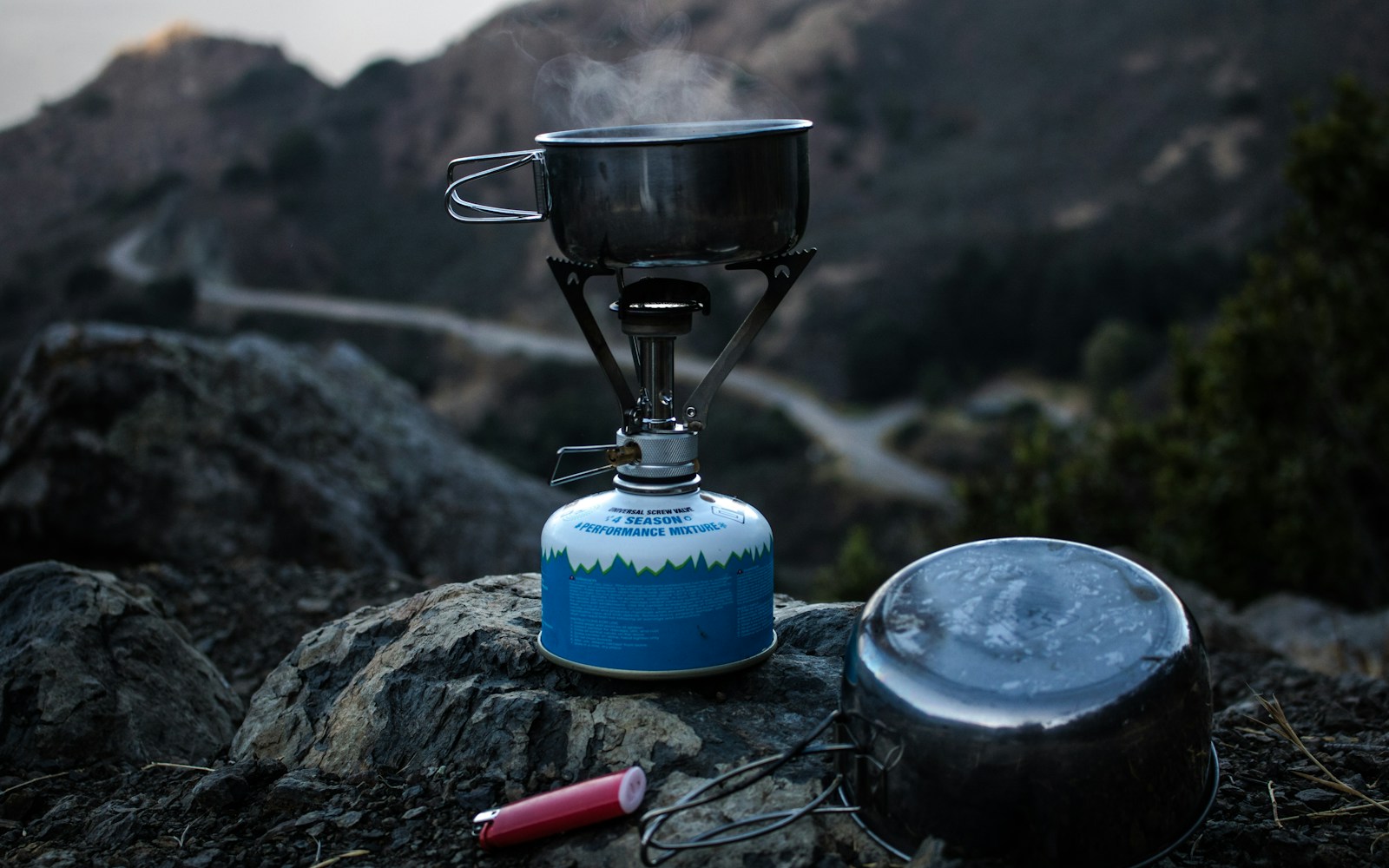
🧰 Tools & Gear You’ll Need
- Backpacking stove (various types available)
- Fuel (compatible with your chosen stove)
- Cookware (pot, possibly a pan)
- Utensils (spork, spoon, etc.)
- Lighter or waterproof matches
- Water bottle or hydration reservoir
- Food items
- Cleaning supplies (small sponge, biodegradable soap)
- Mug or bowl
Selecting the right backpacking stove is a critical decision for any outdoor enthusiast. It directly impacts your comfort, nutrition, and overall enjoyment in the backcountry. This guide will walk you through the essential factors to consider, from the type of trips you take to the specific features that best suit your cooking style and environmental conditions. Making an informed choice ensures you have a reliable and efficient way to prepare warm meals and beverages, no matter where your adventures take you.

What a Backpacking Stove Is and Why the Right Choice Matters
A backpacking stove is a compact, portable cooking device designed for use in the outdoors, far from established campsites with amenities. Unlike larger camp stoves intended for car camping, backpacking stoves prioritize lightness, packability, and fuel efficiency to be carried in a backpack over long distances.
Backpacking stoves versus camp stoves
The primary distinction lies in size, weight, and intended use. Camp stoves are generally larger, heavier, and often run on bulkier fuel sources like propane cylinders, suitable for car camping where weight is not a major concern. Backpacking stoves, conversely, are engineered for portability, often utilizing specialized fuel canisters or lightweight liquid fuels, and are designed to be carried in a pack.
Why stove choice affects weight, fuel use, and meal planning
The stove you choose significantly influences your pack’s total weight. Lighter stoves and more efficient fuel consumption mean less weight to carry, which is crucial for long treks. Furthermore, a stove’s capabilities dictate the types of meals you can prepare. A simple stove might only boil water efficiently, while a more advanced model could allow for simmering and more complex cooking, expanding your culinary options in the wilderness.
How cooking style shapes your best option
Consider your typical backcountry diet. Are you a minimalist who primarily needs hot water for rehydratable meals and drinks? Or do you enjoy preparing more elaborate, home-style meals? Your cooking style—whether it involves boiling water, simmering, or delicate heat control—will directly point you toward specific stove types and features that will best serve your needs.
Start With Your Trip Type
The nature of your outdoor adventures is the most fundamental factor in determining the best stove for your needs. Different trip lengths, durations, and group sizes necessitate different approaches to cooking equipment.
Solo trips and minimalist overnights
For solo hikers on short trips, weight and simplicity are paramount. A small, lightweight canister stove or even a fuel-free option like a wood-burning stove (where permitted and practical) can be ideal. The focus is on carrying the least amount of gear while still being able to prepare essential hot food and drinks.
Weekend backpacking trips
For trips lasting a couple of days, a balance between weight, fuel efficiency, and cooking capability becomes more important. Integrated stove systems or reliable upright canister stoves offer a good blend of performance and convenience, capable of handling simple meals and hot beverages without excessive fuel consumption.
Multi-day thru-hiking and extended backcountry travel
Extended trips demand robust and highly efficient stoves. Liquid-fuel stoves or high-performance canister systems known for their fuel economy and consistent performance in varying conditions are often preferred. Durability and the availability of fuel on long routes are key considerations.
Winter and shoulder-season trips
Colder weather significantly impacts stove performance. Stoves that can operate reliably in freezing temperatures, such as liquid-fuel stoves or canister stoves with pressure regulators, are essential. Group trips in winter may also benefit from larger-capacity fuel sources and more robust pot supports.
Trips with two or more people
When cooking for a group, the size of your stove’s pot support, its heating speed, and fuel capacity become more critical. Larger integrated systems or stoves with wide pot supports can efficiently heat enough water or food for multiple people. Fuel planning also needs to account for the increased consumption.

Identify How You Plan to Cook
Beyond the type of trip, consider the specific cooking tasks you anticipate performing. Your culinary ambitions in the backcountry will heavily influence the stove features you should prioritize.
Boiling water only
If your meals consist solely of rehydratable pouches, instant oatmeal, or coffee and tea, a stove optimized for rapid water boiling is sufficient. Lightweight canister stoves or integrated stove systems excel at this, providing quick heat output with minimal fuss.
Simple one-pot meals
For meals like pasta, rice dishes, or hearty soups, you’ll need a stove that can maintain a consistent heat output for a longer duration. Most canister stoves and liquid-fuel stoves are capable of this, but look for good fuel efficiency to minimize the amount of fuel you need to carry.
Real cooking with simmer control
If you enjoy cooking more complex dishes that require sautéing, simmering sauces, or delicate heat management, a stove with excellent simmer control is crucial. Liquid-fuel stoves and some advanced canister stoves with regulated burners offer the best fine-tuning of flame intensity.
Coffee, breakfast, and meals that require precision heat
Preparing delicate items like eggs, pancakes, or achieving the perfect simmer for a sauce requires precise control over the flame. Stoves with excellent simmer capabilities and stable pot support are best suited for these tasks, preventing scorching and ensuring even cooking.
How meal style affects stove selection
Your preferred backcountry cuisine directly correlates to stove requirements. Minimalist boiling needs are met by basic, high-output stoves. More involved cooking demands stoves with precise flame adjustment, stable pot support, and often, longer burn times per fuel unit.
Understand the Main Backpacking Stove Types
Backpacking stoves fall into several distinct categories, each with its own advantages and disadvantages regarding performance, fuel, weight, and cost.
Upright canister stoves
These are the most common type. The fuel canister screws directly onto the stove body, which sits upright. They are lightweight, easy to use, and offer good performance in moderate conditions. Their main drawback is performance degradation as fuel levels drop and in cold temperatures, due to pressure changes.
Remote canister stoves
In these stoves, the canister is connected to the burner via a fuel line, allowing the canister to sit upright or inverted on the ground. This design generally offers better performance in cold weather and high altitudes because the upright orientation of the canister maintains optimal fuel flow. They also provide more stable pot support.
Integrated stove systems
These systems, often popularized by brands like Jetboil or MSR Reactor, feature a pot that attaches directly to a powerful, enclosed burner unit. They are extremely fuel-efficient and fast at boiling water, making them ideal for minimalist cooking. However, they typically lack simmer control and are less versatile for cooking.

Liquid-fuel stoves
These stoves use liquid fuels like white gas, kerosene, or even gasoline (in emergencies). They are known for their excellent performance in extreme cold and high altitudes, rapid boil times, and long-term fuel availability. However, they are typically heavier, require more priming and maintenance, and involve handling flammable liquids.
Wood-burning stoves
These stoves utilize twigs, leaves, and other small wood found at the campsite as fuel. They eliminate the need to carry fuel but can be challenging to use in wet conditions, produce soot, and are subject to fire restrictions. They are best suited for situations where dry fuel is abundant and fires are permitted.
Hybrid and multi-fuel stoves
These versatile stoves can run on multiple fuel types, offering adaptability in various conditions and locations. For example, some stoves can run on both liquid fuel and canister fuel, providing options depending on availability and climate.
Compare the Most Important Buying Factors
When evaluating different stoves, several key performance metrics and design elements should be considered to ensure the best match for your needs.
Weight and packability
For backpackers, minimizing weight is often a top priority. Consider the total weight of the stove system, including fuel, and how compactly it fits into your pack. Ultralight hikers may opt for the smallest, lightest options, while others might accept slightly more weight for added features or performance.
Burn time and fuel efficiency
Burn time refers to how long a stove can operate on a given amount of fuel. Fuel efficiency, often measured by how quickly it boils a liter of water, indicates how much fuel is used for a specific task. Higher efficiency means carrying less fuel, reducing pack weight on longer trips.
Boil time and heat output
Boil time is the speed at which a stove can bring a set amount of water to a rolling boil. This is a crucial metric for integrated systems and for those who primarily need hot water quickly. Heat output, measured in BTUs (British Thermal Units), generally correlates with faster boil times, but efficiency also plays a significant role.
Simmer control and flame adjustment
The ability to precisely control the flame is essential for cooking more than just boiling water. A stove with good simmer control allows you to gently cook, sauté, or keep food warm without burning. Regulated canister stoves and liquid-fuel stoves generally offer the best simmer capabilities.
Wind resistance and weather performance
Wind can dramatically reduce a stove’s efficiency and increase boil times. Some stoves are designed with built-in windscreens or have burner heads that offer better wind deflection. Remote canister stoves can also offer improved stability and performance in windy conditions compared to upright models.
Stability and pot support design
A stable stove prevents accidental tip-overs, which can be dangerous and result in lost food or fuel. Look for stoves with wide pot supports and a low center of gravity. The design of the pot supports should also accommodate the size and type of cookware you plan to use.
Ignition method and ease of use
Many stoves feature an integrated piezo-igniter for easy lighting, while others require a separate lighter or matches. While integrated igniters are convenient, they can sometimes fail. For reliability, carrying a backup lighter or waterproof matches is always recommended. Ease of setup and operation is also a factor, especially in cold or wet conditions.
Fuel availability and fuel compatibility
Consider where you’ll be backpacking and what fuel types are readily available. Isobutane-propane canisters are widely available in many regions, but their performance can be temperature-dependent. White gas is a reliable option for cold weather but may be harder to find. Multi-fuel stoves offer the most flexibility.
Match the Stove to Your Backpacking Conditions
The environment in which you’ll be using your stove is a critical factor. Different stoves perform optimally under different conditions.
Cold weather and winter use
In freezing temperatures, the pressure in standard isobutane-propane canisters drops, significantly reducing performance. Liquid-fuel stoves and canister stoves with pressure regulators (which maintain consistent fuel flow regardless of temperature) are Best for winter conditions. Inverted remote canister stoves also perform better.
High-wind environments
Strong winds can extinguish flames, reduce heating efficiency, and increase fuel consumption. Stoves with integrated windscreens, lower profiles, or those used with a separate windscreen offer better performance. Remote canister stoves can also be more stable in wind.
High-altitude trips
At higher altitudes, the reduced air pressure can affect stove performance, especially for stoves that rely on atmospheric pressure for fuel delivery. Liquid-fuel stoves and regulated canister stoves tend to perform more consistently at high altitudes than unregulated upright canister stoves.
Wet or variable conditions
In damp or rainy weather, ease of lighting and quick setup are important. Stoves with reliable piezo-igniters or those that are simple to light with matches are advantageous. Fuel types that are less affected by moisture, like liquid fuels, can also be beneficial.
Campsites with limited shelter
If you often camp in exposed locations with little natural windbreak, prioritize stoves with excellent wind resistance and stable pot supports. A stove that can be easily shielded from the wind will be more efficient and reliable.
Choose the Right Fuel for Your Needs
The type of fuel your stove uses is as important as the stove itself, influencing performance, availability, weight, and cost.
Isobutane-propane canisters
These are the most popular fuel source for backpacking stoves due to their convenience, cleanliness, and ease of use. They are lightweight and self-contained. However, their performance diminishes in cold temperatures and they become less efficient as the fuel level decreases.
Propane systems
Larger propane canisters (typically 1 lb) are common for car camping but less so for backpacking due to their bulk and weight. Smaller, specialized propane canisters are available for some backpacking stoves, offering good performance in cold weather.
White gas
Also known as Coleman fuel or naphtha, white gas is a liquid fuel that provides excellent performance in cold temperatures and at high altitudes. It burns cleanly and efficiently but requires priming (preheating the stove) and can be messier to handle than canister fuels.
Alcohol fuel
Alcohol stoves are incredibly simple, lightweight, and inexpensive. They use denatured alcohol as fuel. However, they have lower heat output, longer boil times, and are highly susceptible to wind. They are Best for minimalist trips where fuel weight is a concern and conditions are calm.
Solid fuel tablets
Esbit and similar fuel tablets are compact and lightweight, making them a good backup option or for very short trips. They burn hot but can leave residue and have a distinct odor. They are not ideal for precise cooking or sustained use.
Wood fuel
Wood-burning stoves, or “hobo stoves,” use readily available natural materials like twigs and leaves. This eliminates the need to carry fuel, significantly reducing pack weight. However, they are dependent on finding dry fuel, can be difficult to use in wet conditions, and are often prohibited in fire-restricted areas.
How fuel choice affects performance and convenience
Canister fuels offer the most convenience but have performance limitations in the cold. Liquid fuels provide superior cold-weather performance and are often more economical for extended trips but require more user input and maintenance. Alcohol and solid fuels are the lightest but offer the least power and control.
Evaluate Stove Features Before You Buy
Beyond the basic type and fuel, specific design features can significantly enhance a stove’s usability and performance.
Pot support width and cookware fit
Ensure the stove’s pot supports are wide enough to securely hold your preferred pots and pans. Too narrow, and your cookware may be unstable; too wide, and it might not fit smaller solo pots. Check that the supports are compatible with the base of your cook pot.
Regulated versus unregulated burners
Unregulated stoves rely on the natural pressure within the fuel canister. As fuel is used or temperatures drop, their output can decrease. Regulated stoves use a mechanism to maintain consistent fuel pressure and output, leading to more stable performance in varying temperatures and fuel levels.
Pressure regulation in cold conditions
This feature is particularly important for canister stoves intended for use in cooler weather. Pressure regulators help maintain consistent flame output even as the fuel canister cools down or as fuel levels drop, ensuring a more reliable cooking experience.
Built-in wind protection
Some stoves incorporate designs that shield the burner from wind, such as a raised burner head or a skirt around the base. While helpful, a dedicated windscreen used in conjunction with the stove often provides superior protection.
Integrated pot and burner systems
These all-in-one systems are highly efficient, especially for boiling water, as the pot is designed to maximize heat transfer. They pack down compactly but typically sacrifice simmer control and versatility for cooking.
Folded size and storage shape
Consider how the stove packs down. Does it fit inside your pot? Does it have a dedicated storage case? A compact and well-designed stove will take up minimal space in your pack.
Maintenance and repair considerations
Liquid-fuel stoves generally require more maintenance, such as cleaning the generator tube and pump. Canister stoves are simpler but can have issues with clogged jets or faulty igniters. Consider the availability of spare parts and the ease of field repairs.
Decide How Much Stove You Actually Need
Determine the level of performance and features required based on your priorities, balancing them against weight and complexity.
Ultralight priorities
For ultralight hikers, every ounce counts. This often means opting for minimalist stoves like alcohol stoves, very small canister stoves, or even relying on a pot cozy with a simple boil-only system. Integrated stove systems can also be a good choice for their efficiency.
Balanced weight-and-performance setups
Many backpackers seek a good compromise. This might involve a reliable canister stove with good fuel efficiency, adequate simmer control, and reasonable weight. Remote canister stoves often fit this category well.
Maximal convenience and comfort
If weight is less of a concern, you might opt for a stove with a built-in igniter, excellent simmer control, a stable wide pot stand, and perhaps a liquid-fuel stove for ultimate reliability in all conditions. Ease of use and cooking versatility are key here.
When a heavier stove is worth carrying
A slightly heavier stove might be justified if it offers significantly better performance in your typical conditions (e.g., extreme cold, high winds), much greater fuel efficiency for long trips, or superior cooking capabilities that enhance your backcountry experience.
Set a Budget and Evaluate Value
Backpacking stoves range widely in price. Understanding the cost-performance relationship will help you make a wise investment.
Entry-level options
Basic upright canister stoves or simple alcohol stoves can be found for relatively low prices. These are suitable for occasional use or for those on a tight budget, but they may lack advanced features or long-term durability.
Mid-range value models
This category offers a great balance of performance, features, and durability for the price. Reliable canister stoves with good efficiency and simmer control from reputable brands often fall into this range. They are suitable for most types of backpacking trips.
Premium systems
High-end stoves, such as advanced liquid-fuel stoves or top-tier integrated systems, come with a higher price tag. These often offer superior performance in extreme conditions, exceptional fuel efficiency, or advanced features that justify the cost for serious or frequent backpackers.
What features justify a higher price
Features like robust construction, advanced pressure regulation for cold-weather performance, superior simmer control, exceptional fuel efficiency, and built-in wind resistance often contribute to a higher price point. For demanding conditions or frequent use, these features can be well worth the investment.
Where budget choices can become false economy
Choosing the absolute cheapest stove might lead to frustration. Stoves with poor wind performance, low fuel efficiency, unreliable ignition, or inadequate simmer control can lead to longer cooking times, wasted fuel, and a less enjoyable experience. Investing a bit more upfront often yields better results and durability.
Match the Stove to Your Cookware
Your stove and cookware should work together harmoniously. The design of your pots and pans can affect cooking efficiency and stability.
Pot size and burner stability
Ensure your pots fit securely on the stove’s pot supports. A pot that is too large or too small can be unstable. For larger pots, a stove with wider, sturdier supports is essential. For solo trips, a small, lightweight pot is often paired with a compact stove.
Fry pans and simmering pots
If you plan to fry or use pots that require gentle simmering, look for stoves with excellent simmer control and wide, flat pot supports that provide a stable base for these types of cookware.
Heat exchanger pots
These pots have fins on the bottom to improve heat transfer and reduce boil times. They are often used with integrated stove systems but can also work with other stoves. Ensure your stove’s burner design is compatible with the pot’s base for optimal efficiency.
Solo cook kits versus shared cook systems
A solo cook kit might consist of a small pot that doubles as a mug. For groups, larger pots and potentially a separate frying pan might be necessary, requiring a stove with more robust pot support and higher heat output.
Why cookware compatibility matters before purchase
Bringing the wrong cookware can render even the best stove inefficient or unstable. Consider your stove’s burner size, pot support stability, and wind resistance when selecting pots and pans. Ideally, your cookware should nest compactly with your stove for efficient packing.
Use a Simple Decision Framework
To simplify the selection process, consider your absolute top priorities:
If your priority is minimum weight
Opt for ultralight canister stoves, alcohol stoves, or even solid fuel tablets. Focus on the smallest, lightest components available.
If your priority is fast boiling
Integrated stove systems are typically the fastest. High-output canister stoves and liquid-fuel stoves are also good options.
If your priority is cold-weather reliability
Liquid-fuel stoves or regulated canister stoves are essential. Consider stoves designed specifically for winter conditions.
If your priority is actual cooking
Prioritize stoves with excellent simmer control and stable, wide pot supports. Liquid-fuel stoves and higher-end regulated canister stoves usually perform best here.
If your priority is low cost
Entry-level upright canister stoves or simple alcohol stoves offer the most budget-friendly options. Be mindful of potential compromises in performance or durability.
If your priority is all-around versatility
Multi-fuel stoves or robust remote canister stoves that perform well across a range of temperatures and conditions offer the greatest adaptability.
Common Mistakes to Avoid When Choosing a Backpacking Stove
Many beginners make common errors when selecting their first backpacking stove. Being aware of these pitfalls can save you frustration and ensure you have reliable gear.
Buying based on weight alone
While weight is important, choosing the lightest stove without considering its performance in your typical conditions or its ability to cook your desired meals can lead to disappointment. Performance and reliability often outweigh marginal weight savings.
Ignoring wind conditions
A stove that performs beautifully in calm conditions can be rendered useless by wind. Always consider how well a stove handles wind, or plan to use a separate windscreen.
Overlooking fuel availability
Ensure that the fuel type your stove uses is readily available in the regions where you plan to travel. Specialty fuels might be difficult to find in remote areas.
Choosing a stove that does not match your cookware
An unstable pot on a narrow burner, or a tiny burner struggling to heat a large pot, are common issues. Ensure your stove and cookware are compatible in terms of size, stability, and heating requirements.
Forgetting about simmer needs
If you ever plan to cook more than just boil water, a stove with poor simmer control will be a major limitation. Don’t overlook this feature if you enjoy more complex backcountry meals.
Assuming all stoves work equally well in cold weather
Standard canister stoves perform poorly in freezing temperatures. If you plan any cold-weather or winter camping, you must choose a stove specifically designed for these conditions.
Backpacking Stove Safety Basics
Safe operation of any backpacking stove is paramount to prevent accidents, injuries, and environmental damage.
Ventilation and carbon monoxide risk
Never use a stove inside a tent, sleeping bag, or any confined space. Stoves produce carbon monoxide, which is odorless and deadly. Always operate stoves in well-ventilated areas outdoors.
Safe stove placement and stability
Set up your stove on a level, stable, non-flammable surface, away from flammable materials like tents, sleeping bags, and dry vegetation. Ensure the pot supports are firmly planted and the pot is stable before lighting.
Fire safety around dry vegetation
Be extremely cautious when operating stoves in dry, windy conditions. Ensure there is no risk of sparks igniting surrounding grasses or leaves. Carry a small fire starter and have water readily available in case of accidental flare-ups.
Fuel storage and transport basics
Store fuel canisters upright and away from heat sources. Never store fuel inside your tent. When transporting fuel, ensure canisters are tightly sealed and protected from damage.
General field-use precautions
Always follow the manufacturer’s instructions for your specific stove. Keep children and pets at a safe distance. Be aware of your surroundings and potential hazards. Never leave a lit stove unattended.
Final Pre-Purchase Checklist
Before making your final decision, run through this checklist:
Confirm trip type
Is it a short solo trip, a multi-day group excursion, or a winter expedition?
Confirm cooking style
Will you only boil water, or do you plan to simmer and cook more elaborate meals?
Confirm fuel availability
Is your chosen fuel type readily available where you hike?
Confirm stability and cookware fit
Will the stove reliably support your pots and pans?
Confirm weight and pack size
Does the stove system fit within your weight and packability goals?
Confirm weather suitability
Can the stove perform adequately in the temperatures and wind conditions you expect?
Confirm budget and long-term value
Does the stove offer good value for its price and intended lifespan?
How to Choose the Best Backpacking Stove for Your Needs
By systematically considering the following steps, you can confidently select the ideal backpacking stove:
Step 1: Define your primary use case
Start by clearly identifying the types of trips you take most often, the number of people you typically cook for, and your general cooking style (boil-only vs. actual cooking). This initial assessment narrows down the broad spectrum of options.
Step 2: Narrow by stove category
Based on your primary use case, select the stove category that best fits. For example, ultralight solo trips might point towards canister or alcohol stoves, while winter trips would necessitate liquid-fuel or regulated canister stoves.
Step 3: Compare performance features
Once you have a few categories in mind, compare specific models based on critical features like boil time, fuel efficiency, simmer control, wind resistance, and stability. Read reviews and consult specifications.
Step 4: Check fuel and cookware compatibility
Verify that the stove uses a fuel type you can easily obtain and that its pot supports are suitable for the cookware you own or plan to purchase. Ensure the entire system works together efficiently.
Step 5: Make the final choice based on conditions and budget
Consider the specific environmental conditions you’ll most often encounter (cold, wind, altitude) and your budget. Weigh the trade-offs between cost, weight, performance, and durability to make your final selection.