H2O at Home: Quick Field Verdict
Best for: Active households, campervan owners and cabin users who want a compact, reusable cleaning system.
Core idea: Task-specific microfibres designed to clean many everyday surfaces mainly with water.
Useful starting point: A small cloth set for general surfaces, glass and finishing work.
Main caution: Correct cloth selection and care matter, and specialist cleaners may still be needed for some jobs.
Outdoor life has a habit of moving dirt indoors. Muddy shoes reach the hallway, cooking grease settles around a campervan galley, fingerprints cover cabin windows, and damp kit turns a tidy staging area into a cleanup job. Many people respond by collecting a cupboard full of sprays, wipes and single-purpose products. H2O at Home proposes a more compact approach: reusable microfibres chosen for specific surfaces, with water doing much of the routine work.
The French brand sells household cleaning tools, floor systems, laundry and dish products, bath linen, hygiene items, organic cosmetics and aromatherapy products. Its water-first cleaning range is the most relevant part for road-trippers and outdoor households because it can simplify the kit kept at home, in a van or at a weekend base. This H2O at Home review looks at the system rather than promising a miracle cloth: what the main tools are, where they make sense and what you should check before ordering. You can explore the current H2O at Home collection here.
This guide is based on H2O at Home’s current French storefront and product information, not a claimed hands-on test. Product colours, bundles, prices, stock, workshop offers and delivery conditions can change. Check the live product page and checkout details before buying. Outdoor Story Lab may earn a commission from purchases through marked links.
Why Water-First Cleaning Fits an Active Home
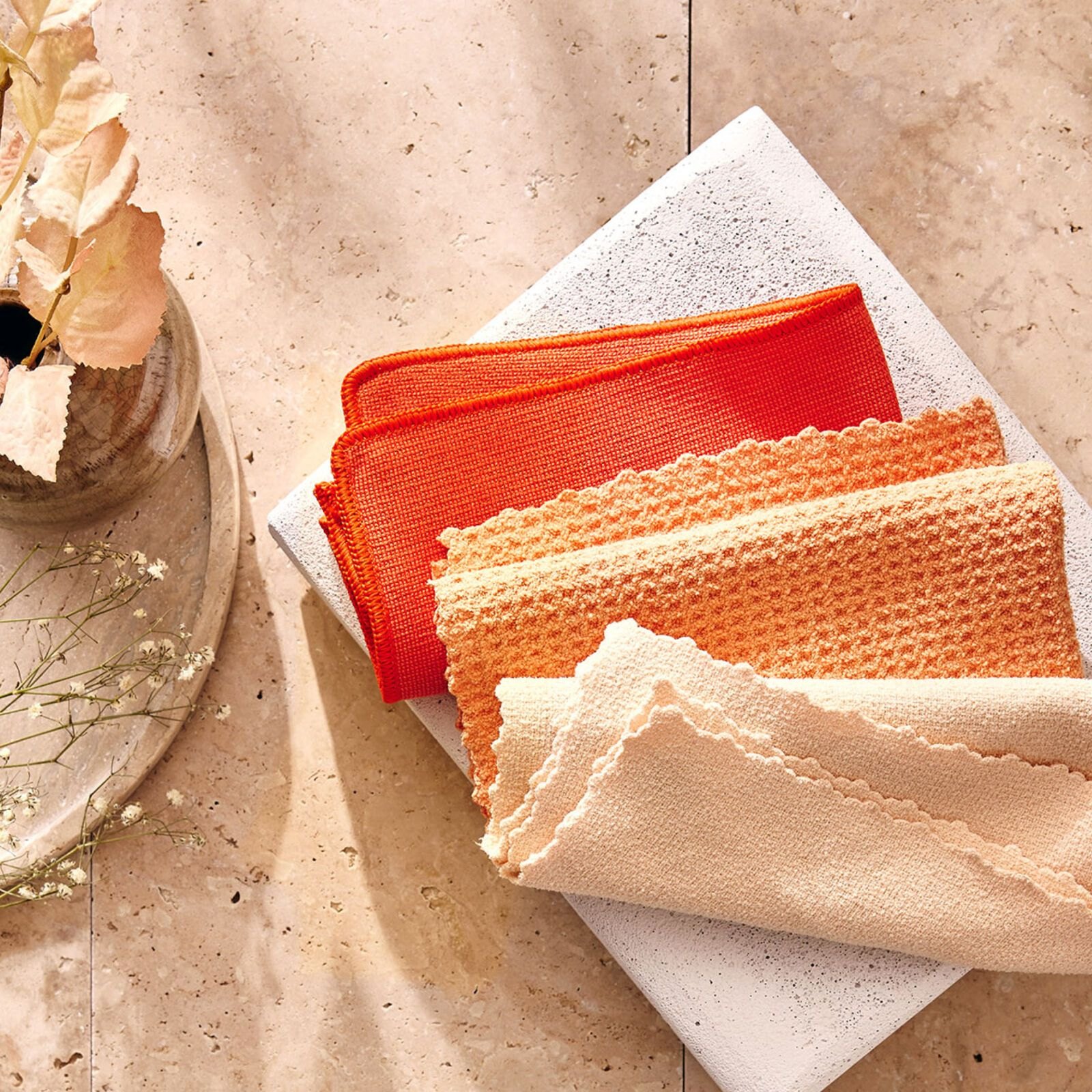
A useful cleaning system for an outdoor household should be quick to deploy, easy to store and simple enough that it actually gets used after a long day. The appeal of microfibre is not merely that it is reusable. Different weaves can be designed to pick up dust, loosen greasy residue, absorb moisture or finish a surface with fewer visible marks. H2O at Home organises its cloths around those tasks rather than presenting one generic cloth as the answer to everything.
That matters in compact spaces. A campervan or small cabin has limited storage, and strong fragrances or multiple leaking bottles are not always welcome. A few clearly assigned cloths can cover tables, sealed worktops, glass, mirrors and many everyday hard surfaces. At home, the same approach can make the post-trip reset easier: clean the gear-sorting bench, wipe the car interior, deal with hallway grime and prepare the kitchen for the next outing.
The sensible interpretation is “less dependence on a large collection of cleaners,” not “nothing except water under all circumstances.” Heavy mineral deposits, burnt-on grease, specialist surface care and situations requiring disinfection may call for an appropriate product. Always follow the surface manufacturer’s instructions as well as H2O at Home’s current guidance.
What H2O at Home Actually Sells
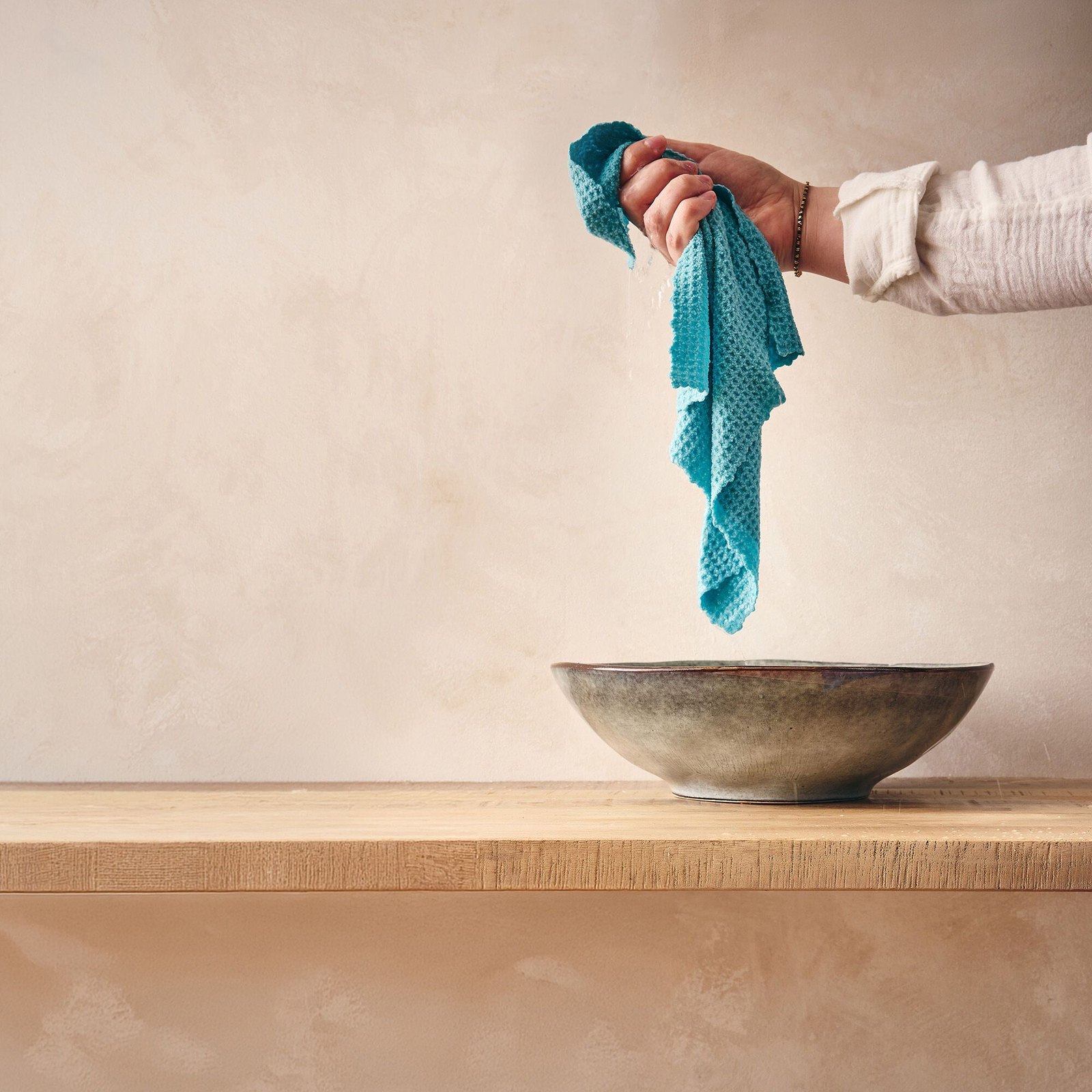
The catalogue is broader than cleaning cloths. It includes products for household surfaces, floors, dishes and laundry, alongside bathroom textiles, personal hygiene, cosmetics and aromatherapy. Shopping can take place through the online store, while the brand also works with advisers and workshop-style demonstrations. Those guided formats may help if you are unsure which weave belongs on which surface, but online shoppers can still build a small system by starting with the jobs they perform most often.
Microfibre essentials
Task-specific cloths for general household cleaning, glass, dusting and finishing form the most compact entry point. They are easy to divide between home, vehicle and cabin use.
Floor cleaning
Mops, pads and reusable floor textiles extend the same system to larger areas. These suit kitchens, entry zones and smooth floors where trail grit tends to accumulate.
Laundry and dish care
The store also carries products aimed at routine washing and kitchen cleanup. These are optional additions rather than prerequisites for trying the microfibre method.
Personal and home comfort
Bath linen, hygiene, organic cosmetics and aromatherapy make the shop broader than a specialist cleaning-tool retailer.
If your priority is a simpler cleaning setup, resist building a large basket immediately. Begin with two or three recurring problems and match products to them. Browse H2O at Home’s current cleaning range and compare each item’s intended surface, care instructions and included components.
Kit Signature: A Compact Cleaning Core
The Kit Signature is an easy way to understand the brand’s system because it groups three microfibre textiles for different jobs. Rather than using the same damp cloth for everything, the set encourages a sequence: loosen and collect dirt with the appropriate textile, manage moisture, then finish surfaces where appearance matters. The current product page should be treated as the authority for the exact colours, fibre composition and care directions included in the version available when you order.
For an active household, a three-cloth core can be assigned by zone. One set might live near the main kitchen, while another could be reserved for a campervan or cabin. Keeping vehicle cloths separate is especially practical when they encounter road film, cooking residue or gritty door areas. A small breathable pouch also makes it easier to carry used cloths home without mixing them with clean kitchen textiles.
The Kit Signature is not automatically the right purchase for everyone. If you mainly need help with one stubborn task, a dedicated glass cloth or floor tool may be a more direct starting point. If you want a general introduction, however, check the current H2O at Home starter and cloth sets before comparing individual pieces.
The Window Cloth: Small Tool, Clear Use Case
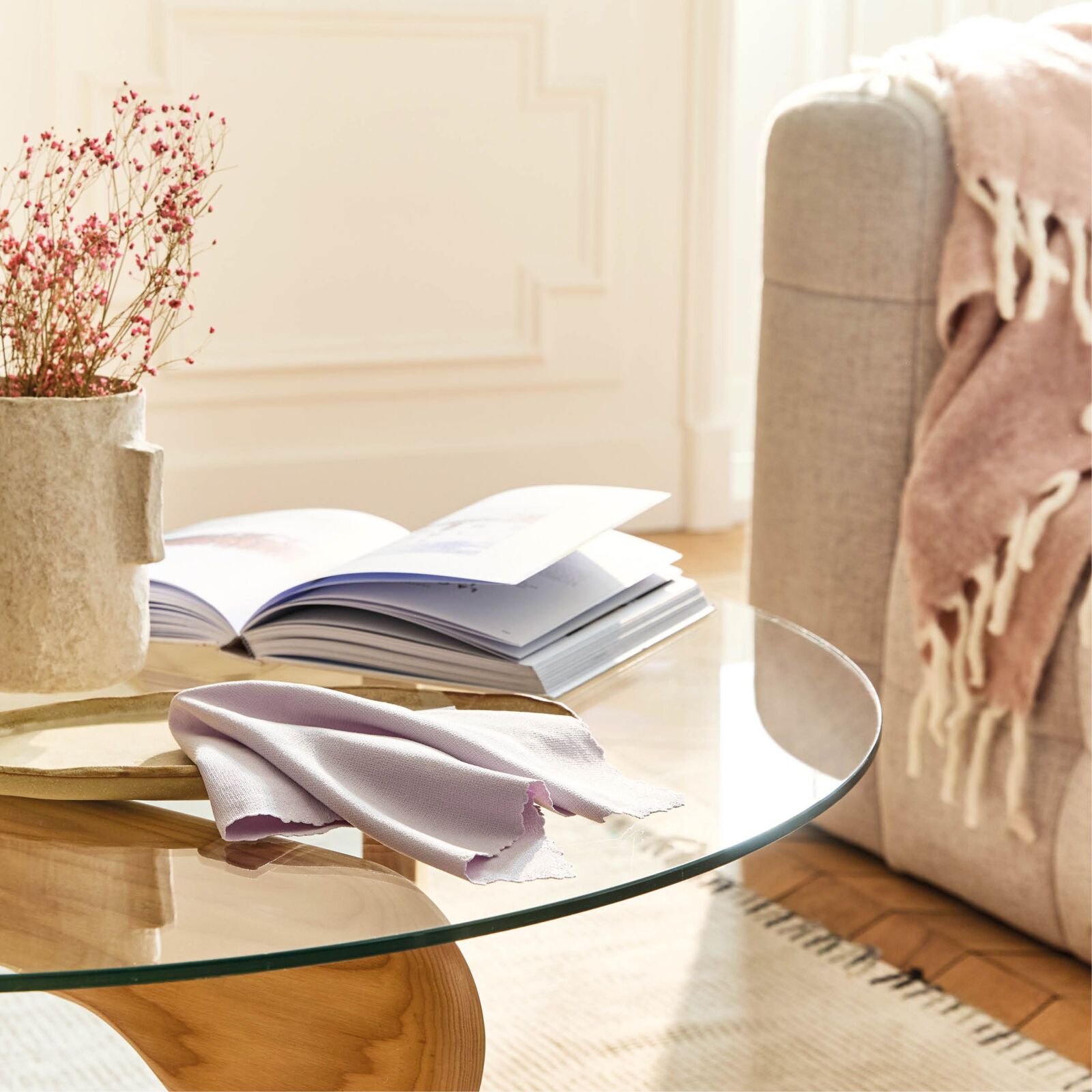
Windows and mirrors expose weak cleaning technique immediately. Too much product can leave smears; a cloth that sheds fibres creates a second task; and wiping dusty glass without first removing grit can drag debris across the surface. H2O at Home’s Chiffonnette Vitres is positioned specifically for glass and a finish with fewer visible water marks or streaks.
That makes it relevant beyond the bathroom mirror. Campervan windscreens and side windows collect fingerprints on the inside, while cabin glazing shows condensation marks, cooking film and dust. At home, it can be kept for patio doors, mirrors and other suitable glass surfaces. For safety-critical vehicle glass, follow automotive guidance and do not apply anything that could interfere with coatings or visibility. Remove loose grit first and test an inconspicuous area when the surface treatment is uncertain.
Fluid 3E Mop: When the Cleaning Zone Gets Bigger
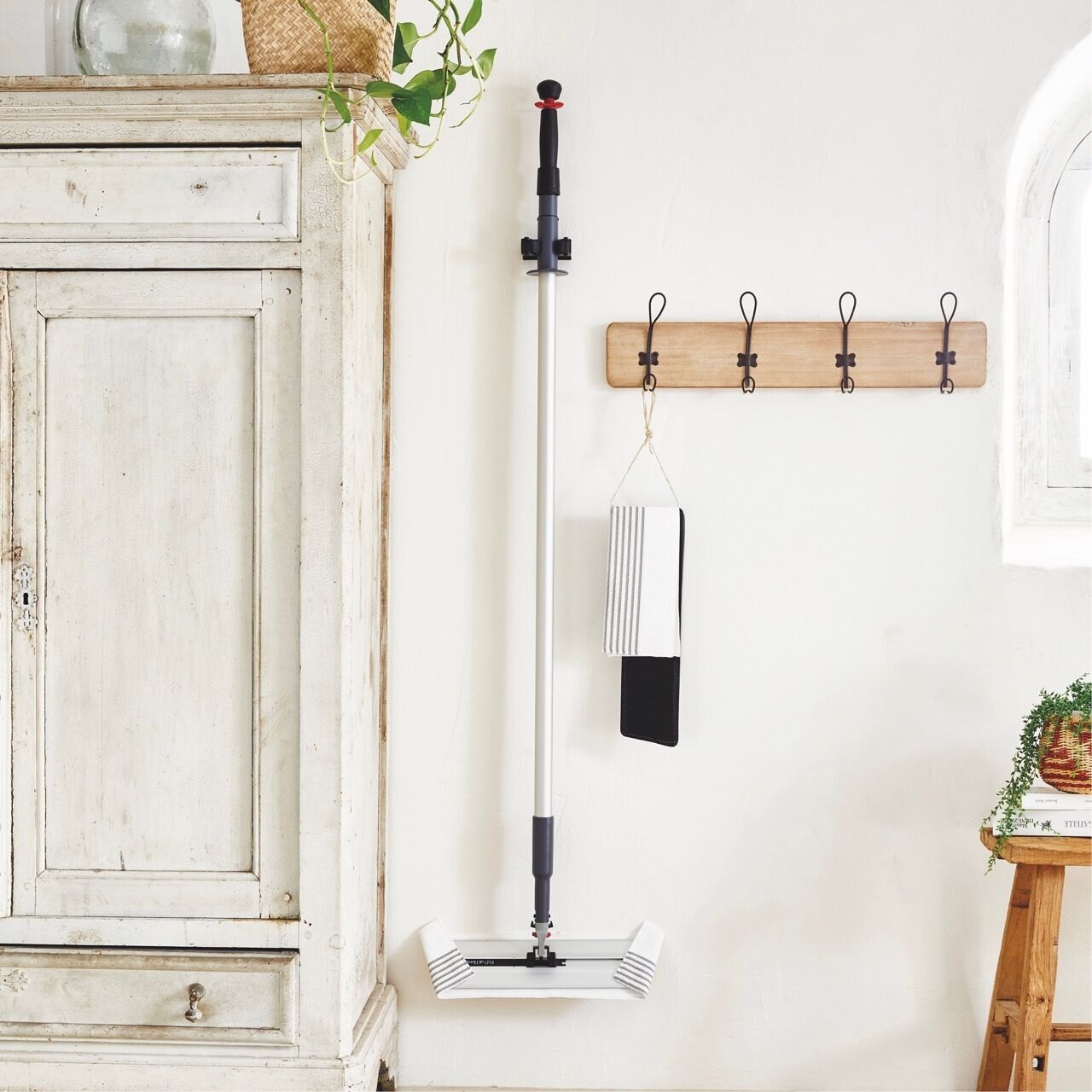
Cloths are efficient for targeted cleanup, but larger smooth floors need a tool that keeps you upright and controls water. The Fluid 3E floor system uses a refillable 500 ml reservoir and a tri-directional spray, according to the current product information. Its 140 cm handle is designed for standing use, while the researched kit version includes the handle, an aluminium plate, two Log 5 mops and a pad. Bundle contents can change, so verify the live listing rather than assuming every version is identical.
The integrated reservoir can be useful in a small apartment, cabin or hard-floor entry area because there is no bucket to move around. It also gives more control than flooding a floor that only needs a quick reset. A spray mop is not a universal outdoor-cleaning tool, however: rough decking, untreated timber and heavily gritted surfaces require methods appropriate to those materials. Vacuum or sweep abrasive debris first, and follow the flooring manufacturer’s guidance.
H2O at Home reports very high mechanical bacteria removal for its Log 5 textile under its stated conditions. Treat that as a brand-reported performance claim, not a substitute for a disinfectant protocol where one is required. Cleaning, mechanical removal and disinfection are related but different tasks.
A Practical Home, Van and Basecamp Loadout
The best system is not the one with the most pieces. It is the smallest setup that covers your real cleaning pattern. For many readers, that means a household set plus a deliberately limited travel set.
Suggested compact setup
- General-purpose cloth: for suitable sealed surfaces, tables and routine wipe-downs.
- Glass cloth: for mirrors, cabin windows and the inside of appropriate vehicle glass.
- Utility cloth: kept separate for door sills, muddy storage boxes and dirtier zones.
- Small laundry pouch: to isolate damp or used textiles until they can be washed.
- Floor option at home: a suitable mop system for entryways and smooth kitchen floors.
Do not leave a damp cloth sealed in a hot vehicle for days. Rinse or dry it as soon as practical, then wash it according to the product instructions. If space is very tight, carry fewer cloths and make the separation rules clearer rather than packing several unassigned pieces.
Care Instructions That Protect Microfibres
Microfibre performance depends on keeping the structure of the textile in good condition. Fabric softener can coat fibres and reduce how effectively they interact with water and dirt. Bleach and excessive heat may also damage materials. H2O at Home’s product pages give item-specific washing directions; the researched mop textiles, for example, are presented with cautions against fabric softener, bleach and ironing. Confirm the current instructions for every item because allowable temperatures and drying methods can differ.
- Shake or rinse out loose grit before machine washing.
- Separate heavily soiled utility cloths from delicate household textiles.
- Skip fabric softener unless the manufacturer explicitly says otherwise.
- Let cloths dry fully before storing them in a closed box or travel kit.
- Replace a textile if its structure, cleanliness or assigned use can no longer be trusted.
This routine is a small commitment, but it is central to the value proposition. A reusable cloth only simplifies the cupboard if it remains pleasant and effective to use. Before buying, review the care notes for the H2O at Home products you are considering.
H2O at Home: Pros and Limitations
Pros
- Task-specific microfibres can reduce reliance on multiple routine cleaning sprays.
- Reusable, compact tools suit small homes, campervans and cabins.
- Clear product families for surfaces, glass and floors.
- Refillable floor-tool design avoids carrying a bucket for quick jobs.
- Online shopping plus adviser and workshop formats offer different ways to learn the system.
Limitations
- Upfront cost is higher than buying basic supermarket cloths.
- Choosing and remembering the correct cloth for each job takes some organisation.
- Care requirements are stricter than for disposable wipes or old rags.
- Specialist cleaners may still be necessary for scale, severe grease, delicate materials or disinfection.
- Availability, delivery and workshop options are centred on the applicable French-market offer.
Ordering, Delivery and Workshops
H2O at Home combines direct online ordering with an adviser-led model. Depending on the current offer, customers may encounter home delivery, relay-point delivery, adviser pickup or grouped-order arrangements. Delivery windows, charges, free-delivery thresholds and promotional bundles are dynamic, so the checkout is more reliable than an old review for those details.
Workshops can be helpful for seeing the technique and understanding textile differences, but they are not essential if the online descriptions answer your questions. Before committing, identify the exact surfaces you want to clean, check compatibility, read the washing instructions and compare what is included in a kit against buying individual tools. You can visit H2O at Home to see current products, availability and ordering options.
Final Verdict: A Thoughtful System for Routine Cleanup
H2O at Home is most convincing when viewed as a system for ordinary, repeated cleaning—not as a promise that one cloth and plain water solve every hygiene problem. The task-specific approach can make a household kit easier to understand, while reusable textiles and refillable tools are a practical match for people trying to reduce clutter and repeated single-use purchases.
For Outdoor Story Lab readers, the strongest use case is the boundary between adventure and home: van interiors, cabin windows, smooth entry floors, kitchen surfaces and the post-trip gear zone. Start with the smallest set that addresses those jobs, learn the care routine and add specialised pieces only when a real gap appears.