Trailhead briefing
DocMorris France is an online pharmacy and parapharmacy with a wide catalogue spanning health, first aid, sun protection, foot care, muscle care, hygiene, beauty and nutrition. For outdoor travellers, its strongest use is not impulse shopping—it is building a compact, purpose-led kit before the next walk, campsite stay, road trip or active holiday.
Explore the current DocMorris France range, then use the field checklist below to decide what genuinely deserves space in your bag.
The easiest gear to forget is often the gear that looks least exciting. A hiker may spend weeks comparing shoes and backpacks, yet remember sunscreen, blister protection or a few basic dressings only on the night before departure. Those small omissions rarely ruin a trip by themselves, but they can make a warm day, a long descent or an evening at camp much less comfortable.
DocMorris France can be useful at this preparation stage because its official navigation brings together several relevant categories in one place. The catalogue is broad enough to compare sun care, basic first-aid products, foot-care items, muscle-comfort options, hygiene essentials and everyday personal care. The trade-off is choice: without a clear list, it is easy to browse far beyond what the itinerary requires.
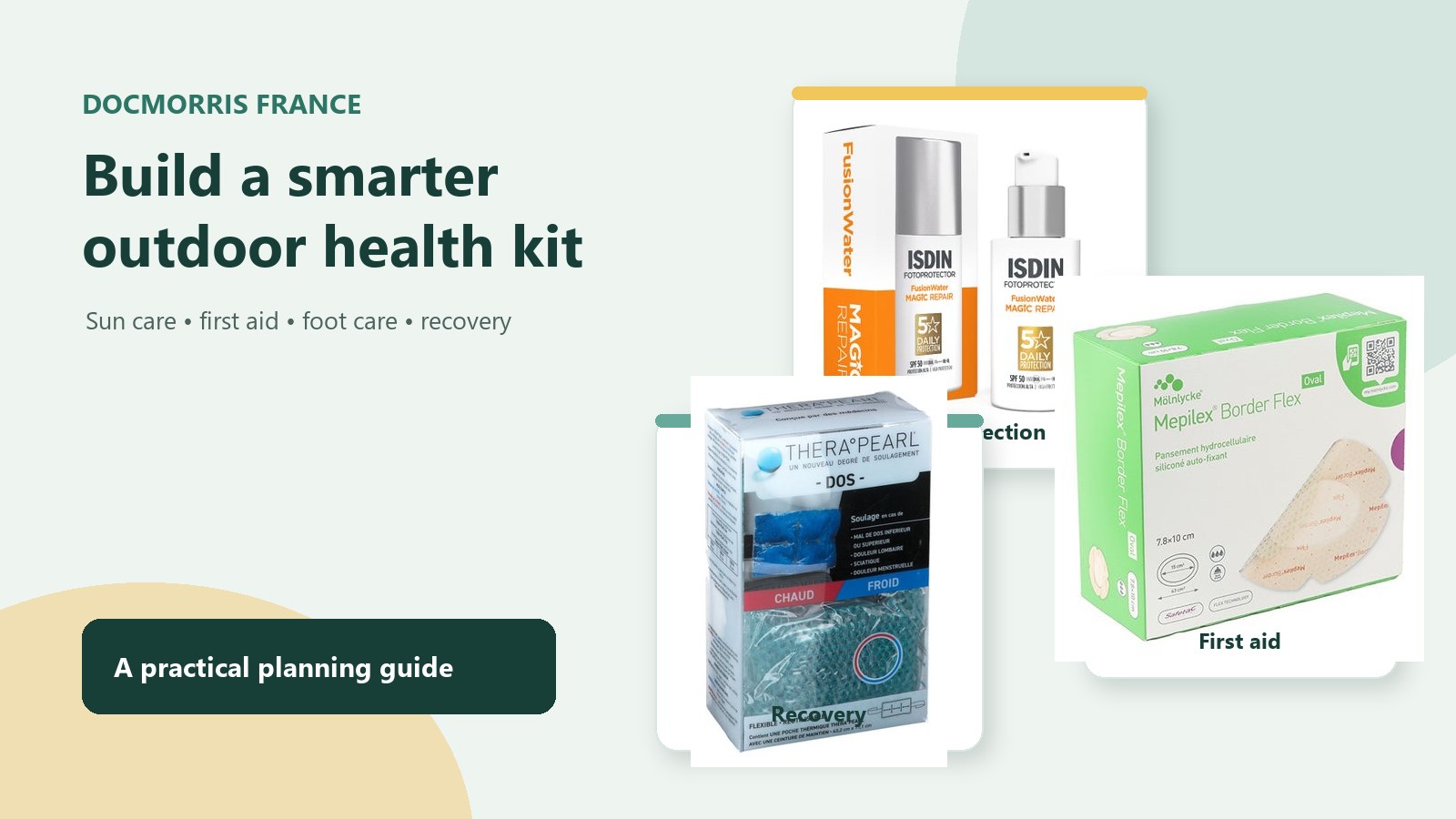
What DocMorris France offers outdoor travellers
DocMorris is not an outdoor-equipment specialist, and it should not be judged like one. You are not visiting it for a tent, stove or waterproof shell. The practical value lies in consumable and personal-care categories that sit around the main equipment list: products for exposed skin, small foot problems, minor first-aid needs, post-activity comfort and campsite hygiene.
The French site also presents beauty, wellness, nutrition, family and pet-related categories, alongside an own-brand selection and frequently changing promotions. That makes it potentially convenient for households packing for several people, but it also means the live product page matters more than a general recommendation. Sizes, ingredients, warnings, seller or fulfilment details, stock and delivery terms can change, so verify them when ordering.
Field rule: start with the trip, not the store
Write down destination, duration, expected sun exposure, walking time, accommodation, access to shops and the people travelling. Only then open the catalogue. This reverses the usual shopping process and reduces duplicate or unnecessary products.
The five-part outdoor health-kit builder
Sun protection
Consider exposed skin, intensity and duration of exposure, water or sweat, reapplication and pack size. Read the current label and instructions rather than relying only on a product name or SPF number.
Foot care
Plan around friction, moisture and the footwear you will actually use. A small foot-care section should be specific to likely problems, not a collection of products with overlapping jobs.
Basic first aid
Keep the kit proportionate to trip length, remoteness and group size. Basic supplies do not replace training, emergency planning or professional medical care.
Recovery and comfort
Think about the evening after the activity: washing, changing, resting and following the instructions of any comfort or muscle-care product you choose.
Hygiene and travel care
Compact cleansing, hand care and personal-care formats can be useful when facilities are limited. Prioritise secure closures and products you already understand.
If this structure matches your packing needs, browse DocMorris by category and compare only the sections connected to your route.
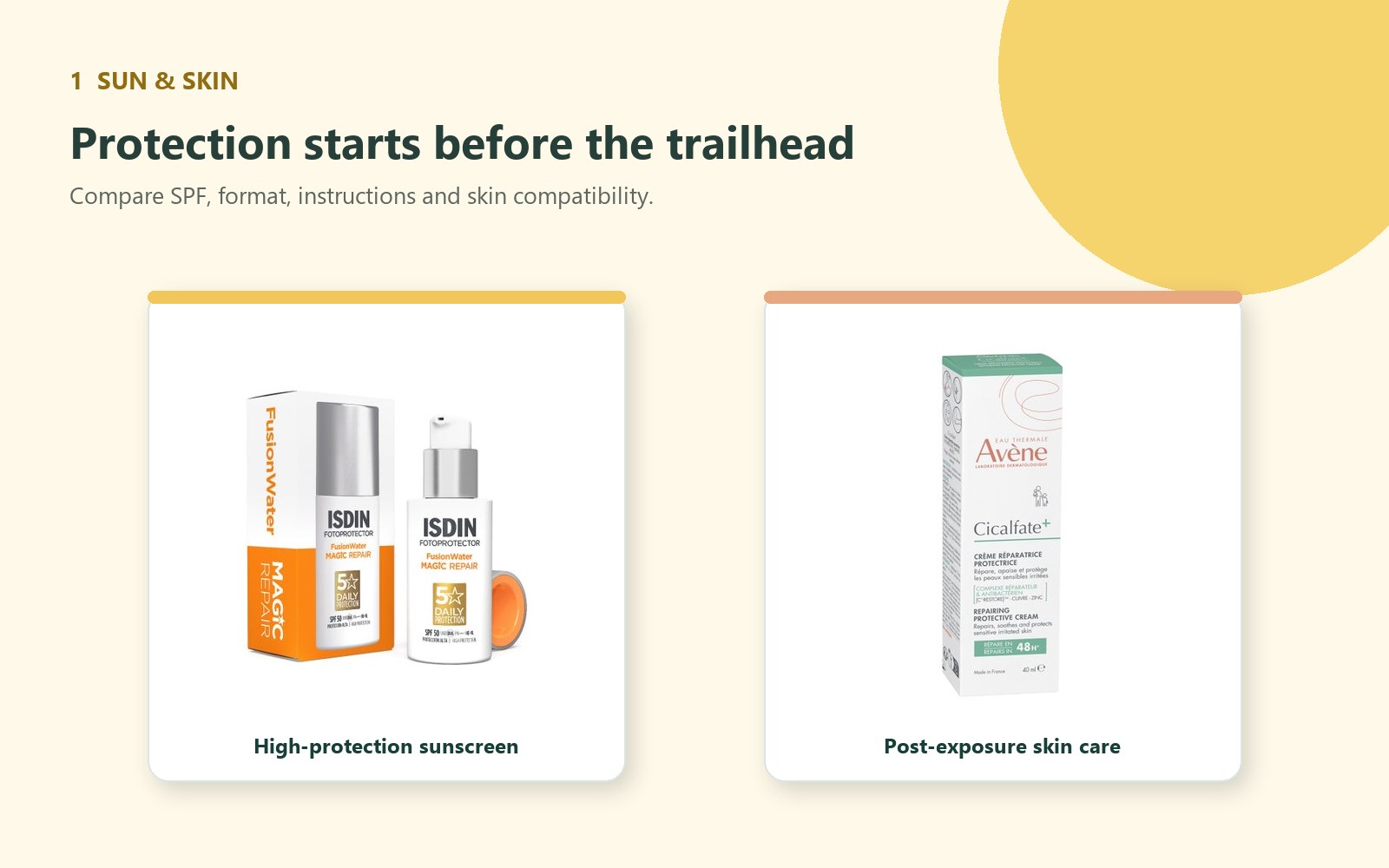
1. Build the sun-and-skin section around conditions
Warm-weather travel makes sun care the most obvious category, but the decision still deserves more thought than “pack sunscreen.” Consider how long you expect to be outside, which areas will be exposed, whether you will be swimming or sweating, and how realistically you can reapply during the day. A small container may be convenient, yet insufficient for a family or a longer trip; a larger one may be economical but awkward on the move.
It is also worth separating protection from after-activity care. They are not interchangeable jobs. Read usage directions, ingredients and warnings, particularly when choosing for children, sensitive skin or a known condition. Hats, clothing, shade and timing remain important parts of a sun plan. If you want to compare formats before packing, check DocMorris France’s current sun-care selection and confirm the live product information.
2. Treat foot care as a system
Foot comfort begins with suitable footwear and socks, but a small kit can help you respond to predictable friction and pressure. The useful question is not “What foot products are popular?” It is “What problem is most plausible with this route and these shoes?” A city-and-trail weekend may call for a different setup from a multi-day walk, while someone using new footwear may plan more conservatively than someone wearing a familiar pair.
Keep items organised and know their intended use before leaving. Do not use a dressing, tape, separator, pad or topical product merely because it is present in the bag. Follow the product instructions, check skin compatibility, and seek appropriate advice if pain, wounds or symptoms require more than simple self-care.
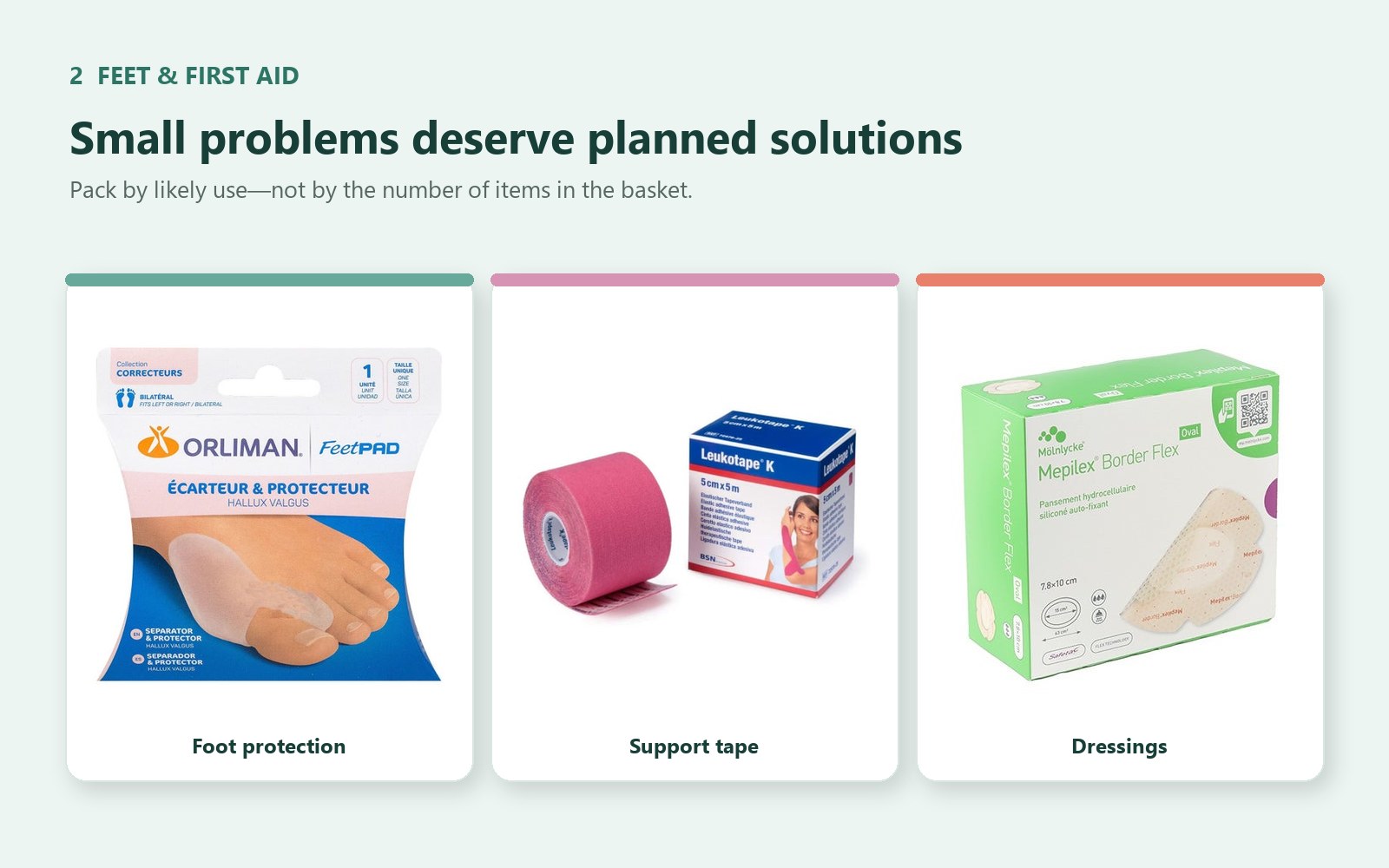
3. Make first aid proportionate to the outing
A day walk close to services and a remote multi-day trip do not create the same planning problem. Group size, weather, activity, communication coverage and access to help all affect what is reasonable to carry. Store-bought supplies are only one layer; route information, emergency contacts, charged communication devices and first-aid knowledge matter just as much.
When comparing products, examine dimensions, quantities, individual packaging, instructions and expiry information where relevant. Avoid assuming that a product is suitable for every person or every injury. The store can help you source items, but it cannot replace judgement or training. For a purpose-led comparison, open the DocMorris catalogue with your written checklist beside you.
Build the kit before the departure-day rush.
Compare the live catalogue by purpose, then verify instructions, availability and delivery timing.
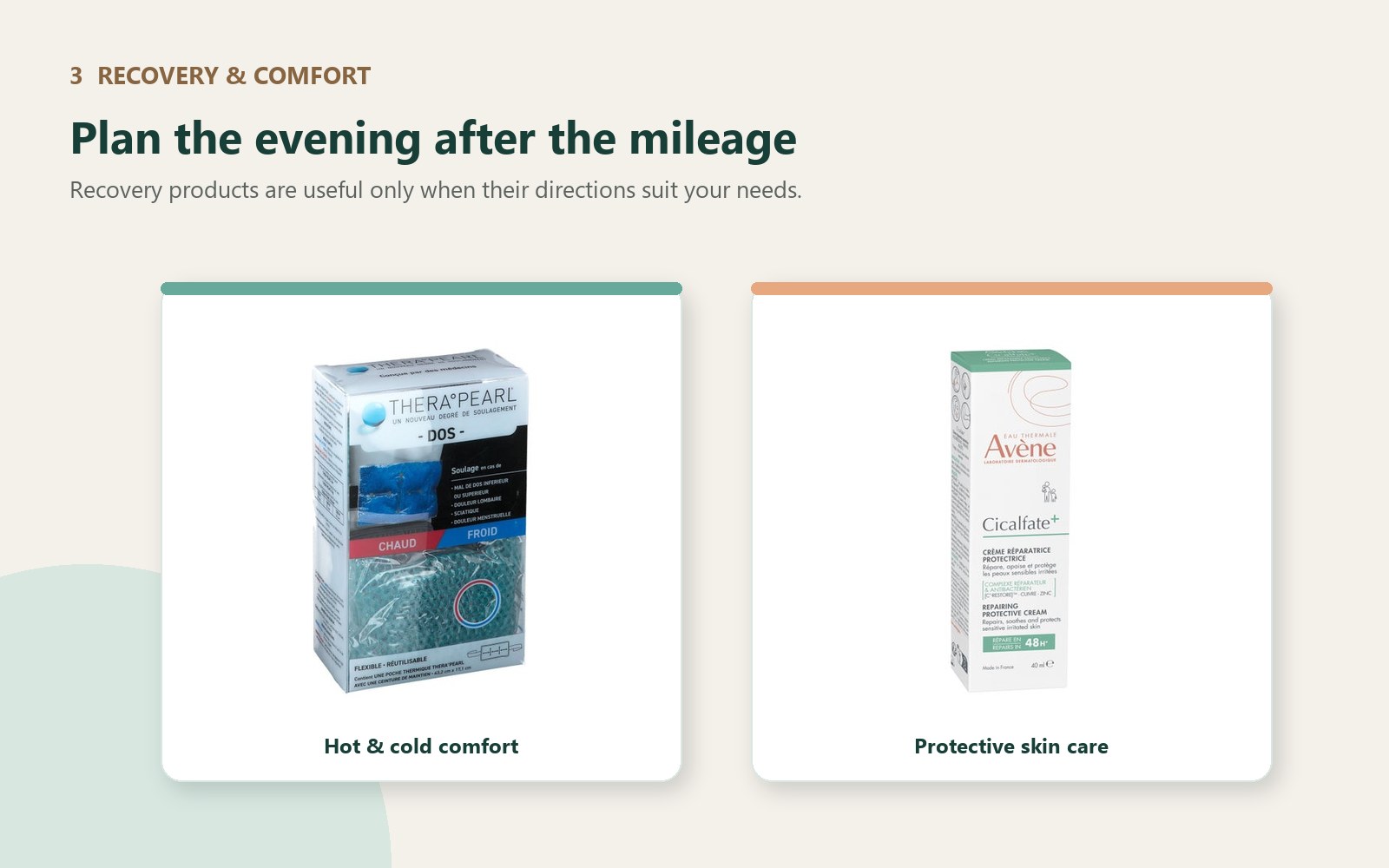
4. Plan recovery without overpromising results
Recovery is a broad word. For most recreational travellers, it starts with ordinary decisions: an appropriate pace, food and fluids, dry layers, sleep and enough time between demanding days. Hot-and-cold products, muscle-care items and protective skin care may fit some routines, but their directions and suitability need to be checked individually.
Be cautious with claims that sound like guaranteed performance or treatment outcomes. A retailer’s category page is useful for discovery, not diagnosis. If you have an injury, persistent pain, medicine-related question, contraindication or health condition, ask a pharmacist or qualified healthcare professional rather than relying on a general shopping guide.
Choose by scenario: a quick packing map
| Trip type | Prioritise | Questions to ask | Avoid |
|---|---|---|---|
| Sunny day hike | Sun protection, small foot-care module, basic dressings | Can I reapply? Is the size enough? What friction points are likely? | Buying multiple products with the same job |
| Camping weekend | Sun care, hygiene, first aid, skin and insect-related planning | What facilities exist? How will products be stored? | Containers that leak or cannot handle heat |
| Road trip | Everyday health items, personal care, vehicle-accessible first aid | Which products belong in the day bag versus the car? | Leaving temperature-sensitive items in a hot vehicle |
| Long walking holiday | Foot strategy, sun plan, rest-day comfort and replenishment | Can I replace consumables en route? What have I used safely before? | Testing many unfamiliar products during the trip |
Ordering and delivery: work backwards from departure
Availability and delivery are part of product suitability. An ideal item that arrives after you leave is not useful, and a substitution made in a hurry can create unnecessary uncertainty. Work backwards from the departure date, leave a buffer, and review the live stock and delivery information for every item. If the order includes several categories, check whether the site shows different fulfilment details.
Promotions, loyalty benefits, thresholds and delivery options can change. Treat them as checkout details rather than permanent reasons to recommend the retailer. The better long-term reason to use a broad catalogue is the ability to compare several relevant categories in one planned session. Before paying, review basket quantities and remove any duplicate “just in case” purchases.
Pros and limitations
Where DocMorris can help
- Broad health, parapharmacy, beauty and personal-care catalogue.
- Relevant categories for sun, feet, first aid, hygiene and comfort.
- Useful for households preparing several travellers or trip types.
- Category-led browsing can support a written packing checklist.
What to keep in mind
- The breadth can encourage overbuying without a firm plan.
- It is not a substitute for outdoor expertise, first-aid training or medical advice.
- Stock, sellers, instructions, promotions and delivery terms may change.
- Product suitability depends on the person, conditions and intended use.
Final verdict: a useful catalogue when the kit stays disciplined
DocMorris France makes the most sense for outdoor readers as a practical pre-trip catalogue. Its range connects several easily forgotten parts of preparation: sun protection, basic first aid, foot care, hygiene and post-activity comfort. That breadth is useful, provided the route and packing list remain in control of the shopping session.
Start with the conditions you expect, define one job for each item, check the current instructions and warnings, and leave enough time for delivery. Then visit DocMorris France to build your shortlist without turning a compact health kit into unnecessary luggage.
Ready to plan by purpose?
Use the five-part builder and compare the latest catalogue information before ordering.
Editorial note: This article is general shopping and packing guidance, not medical advice. Consult a pharmacist or qualified healthcare professional for symptoms, contraindications, medicine-related questions or individual health needs. Affiliate links may earn this site a commission at no extra cost to you.