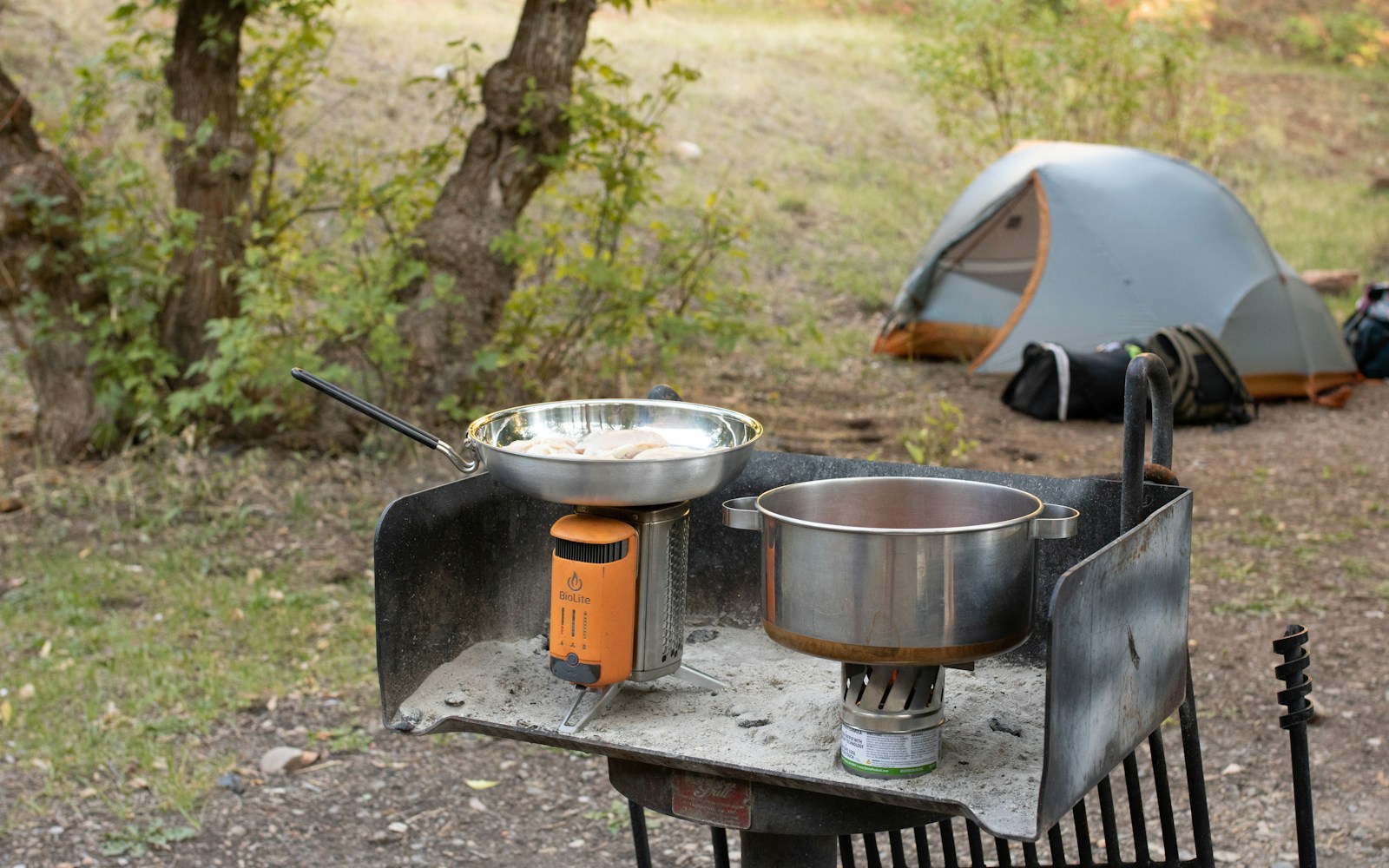
Choosing the right camping stove is fundamental to enjoying your time outdoors, whether you’re preparing a gourmet meal at a car campsite or a quick, warm-up dish on a multi-day trek. The best camping stoves offer a blend of power, efficiency, portability, and durability, tailored to different outdoor cooking styles. For 2026, the market continues to offer robust options, from integrated systems designed for convenience to powerful dual-burner units for group cooking.
| Category | Model | Type | Fuel | Burners | Heat Output (per burner) | Weight | MSRP | Source |
|---|---|---|---|---|---|---|---|---|
| Best Overall (Integrated) | Jetboil Genesis Basecamp | Integrated System | Propane (16.4oz) | 2 | 10,000 BTU | 9.1 lbs | $450 | Jetboil, OutdoorGearLab |
| Best Dual-Burner Value | Camp Chef Everest 2X | Two-Burner Propane | Propane (20lb tank) | 2 | 20,000 BTU | 12 lbs | ~$230 | OutdoorGearLab, Camp Chef |
| Best Budget | Coleman Classic 2-Burner | Two-Burner Propane | Propane (16.4oz cylinder) | 2 | 10,000 BTU | ~17 lbs | $98 | OutdoorGearLab, Coleman |
| Best Portable | Snow Peak Home & Camp Burner | Compact Gas | CB Butane | 1 | 8,333 BTU | 1.1 lbs | $130 | OutdoorGearLab, Snow Peak |
| Best for Groups | Coleman Cascade 3-in-1 | 3-in-1 System | Propane | 2 | 12,000 BTU | 14.8 lbs | $275 | OutdoorGearLab, Coleman |
| Best Ultralight (Backpacking) | MSR Pocket Rocket Deluxe | Canister Stove | Propane/Butane | 1 | ~8,000 BTU | ~3.1 oz | ~$65 | MSR Gear, OutdoorGearLab |
| Best Four-Season | MSR WhisperLite Universal | Multi-Fuel | White Gas/Canister/Kerosene | 1 | 10,500 BTU | 1 lb | ~$140 | MSR Gear |
Understanding Camping Stove Types and Fuel
The world of camping stoves can be broadly categorized by their fuel source and design. For car camping and basecamps, propane stoves remain a popular choice due to their ease of use and consistent performance. These typically connect to larger 20-pound propane tanks, offering extended burn times and high heat output, ideal for cooking elaborate meals. Examples include the
and the
.
For backpackers and those prioritizing weight and packability, canister stoves are the standard. These utilize compact fuel canisters, usually a blend of isobutane, propane, and butane, which screw directly onto the stove. They are lightweight, ignite easily, and offer good simmer control, though their performance can be affected by cold temperatures and high altitudes. The
is a prime example of this category.
Multi-fuel stoves, such as the
, offer the greatest versatility. They can run on liquid fuels like white gas, kerosene, or even gasoline, as well as isobutane/propane canisters. This makes them an excellent choice for four-season camping, international travel, or situations where fuel availability might be uncertain.

Top Picks for 2026: Performance and Value
When evaluating camping stoves for 2026, several models stand out for their specific strengths. The
Jetboil Genesis Basecamp
is recognized for its integrated system design, combining a stove and cookware into a compact unit that prioritizes convenience and wind resistance for car camping. Its dual burners offer flexibility for cooking multiple items simultaneously.
For those seeking robust dual-burner performance without the premium price tag of integrated systems, the
Camp Chef Everest 2X
is a highly regarded option. It delivers substantial heat output from each of its two burners, making it capable of handling demanding cooking tasks for groups. Its sturdy construction suggests longevity, a key factor for frequent campers.
The
Coleman Classic 2-Burner
continues to be a benchmark for budget-conscious consumers. It provides reliable dual-burner functionality at an accessible price point, making it a staple for many campers. While it may not offer the highest heat output or the most advanced wind protection, its simplicity and affordability make it a compelling choice for casual use.

Specialized Stoves for Specific Needs
Beyond the general-purpose stoves, specialized models cater to niche requirements. The
Snow Peak Home & Camp Burner
is a standout for its portability and unique design, folding down into a compact form that’s easy to transport. It’s ideal for solo travelers or those with limited space.
For larger groups or more complex meal preparations, the
Coleman Cascade 3-in-1
offers a versatile solution. Its 3-in-1 capability suggests adaptability to different cooking scenarios, potentially including a griddle or grill attachment, alongside its dual burners.
Ultralight backpackers will find the
MSR Pocket Rocket Deluxe
to be an excellent companion. Weighing mere ounces, it provides efficient heat for boiling water and simple meals without adding significant bulk to a pack. Its refined design aims for improved fuel efficiency and stability.
The
MSR WhisperLite Universal
addresses the needs of the most demanding conditions. Its multi-fuel capability ensures operation in extreme cold or at high altitudes where canister fuels might falter. This stove is built for reliability when conditions are at their worst.

Key Considerations for Purchase
When selecting a camping stove, several factors should guide your decision. Heat output, measured in British Thermal Units (BTU), is a primary indicator of a stove’s power. Higher BTU ratings generally mean faster boiling times and the ability to cook more efficiently, especially in adverse weather. However, extremely high output can sometimes make simmering delicate sauces more challenging.
Fuel type and availability are critical. Propane is widely available in North America but can be bulky for backpacking. Canister fuels are compact but can be less efficient in cold. Liquid fuels offer excellent cold-weather performance but require more maintenance and can be messier to handle. Always ensure you are using the correct fuel for your stove to avoid damage or safety hazards.
Weight and packed size are paramount for backpackers and those with limited vehicle space. Integrated systems often balance cooking performance with packability, while traditional two-burner stoves tend to be heavier but offer more cooking surface area.

Safety and Maintenance
Operating any camping stove requires adherence to safety protocols. Always use stoves in well-ventilated outdoor areas to prevent the buildup of carbon monoxide, a colorless, odorless, and potentially deadly gas. Never operate a stove inside a tent, RV, or other enclosed space. Ensure stoves are placed on a stable, level surface away from flammable materials.
Regular maintenance will prolong the life of your stove and ensure its reliable performance. This typically involves cleaning burner heads to prevent clogging, checking fuel lines for leaks, and ensuring all components are functioning correctly. For liquid fuel stoves, proper cleaning of the generator tube and fuel pump is essential. Always consult the manufacturer’s manual for specific maintenance instructions.
Land managers often impose fire restrictions, especially during dry seasons. It’s crucial to check local regulations before your trip, as some areas may prohibit open-flame stoves or require specific types of enclosed-flame systems. Understanding and respecting these rules helps prevent wildfires and ensures continued access to outdoor recreation areas.
Discontinued Models and Evolving Technology
The outdoor gear market is dynamic, with manufacturers frequently updating their product lines. Some models mentioned in older reviews, such as the Camp Chef Kodiak Three-Burner or the GSI Outdoors Pinnacle Pro 2, may no longer be in production or have been superseded by newer designs. It’s always advisable to check the manufacturer’s website for the most current models and specifications.
Similarly, specific performance claims, like exact boil times, can vary significantly based on testing conditions, including altitude, ambient temperature, wind, and water volume. While manufacturers provide estimates, real-world performance can differ. Focus on the general capabilities and features of a stove rather than precise, unverified metrics. The trend in stove technology continues to move towards greater fuel efficiency, improved wind resistance, and more compact, integrated designs.
Frequently Asked Questions
What is the best camping stove for car camping?
For car camping, stoves that offer a balance of cooking space, power, and convenience are ideal. The
Jetboil Genesis Basecamp
provides an integrated system with dual burners, while the
Camp Chef Everest 2X
offers high heat output and durability for more demanding cooking. The
Coleman Classic 2-Burner
is a reliable budget option.
Which camping stove is best for backpacking?
Backpacking stoves prioritize low weight and compact size. The
MSR Pocket Rocket Deluxe
is a popular choice for its minimal weight and efficient performance. Canister stoves generally offer the best combination of these factors for most backpacking scenarios.
How important is BTU output on a camping stove?
BTU (British Thermal Unit) output indicates a stove’s heating power. Higher BTU ratings mean faster boiling and cooking, which is beneficial in windy conditions or when cooking for larger groups. However, very high BTU stoves can sometimes make simmering difficult.
Can I use any fuel with any camping stove?
No, it is crucial to use only the fuel type specified by the stove manufacturer. Using the wrong fuel can damage the stove, lead to inefficient performance, or create a safety hazard. For example, liquid fuel stoves are not designed for propane canisters, and vice versa.
Are integrated camping stove systems worth the cost?
Integrated systems like the Jetboil Genesis Basecamp can be worth the cost if convenience, packability, and wind resistance are high priorities. They often combine the stove, fuel, and cookware into a single unit, simplifying setup and transport. However, they may offer less cooking flexibility than traditional two-burner stoves.