Liforme Yoga Mat Review: Premium Grip for Travel, Recovery and Outdoor Practice
Liforme is best known for premium yoga mats with a highly grippy surface and a printed alignment guide. For hikers, road-trippers and retreat travellers, the more useful question is not whether the mat looks good in a studio. It is whether its size, weight, grip and care requirements make sense away from home.
This review compares the Classic and Travel formats, explains where the alignment system helps, and sets realistic expectations for campsite, cabin, hotel and vehicle-based use.
A yoga mat can be more than workout equipment on a trip. It can create a clean, familiar surface for morning mobility, post-hike stretching, breathing practice or a short recovery session when the cabin floor is cold and the hotel carpet is questionable. Liforme approaches that job with more structure than a basic foam mat: its range combines a moisture-responsive top surface, etched alignment markings, natural-rubber construction and a larger-than-average practice area.
If that matches how you travel, you can view Liforme’s current yoga-mat range and available colours. Check the live product page for current prices, delivery options and regional availability.
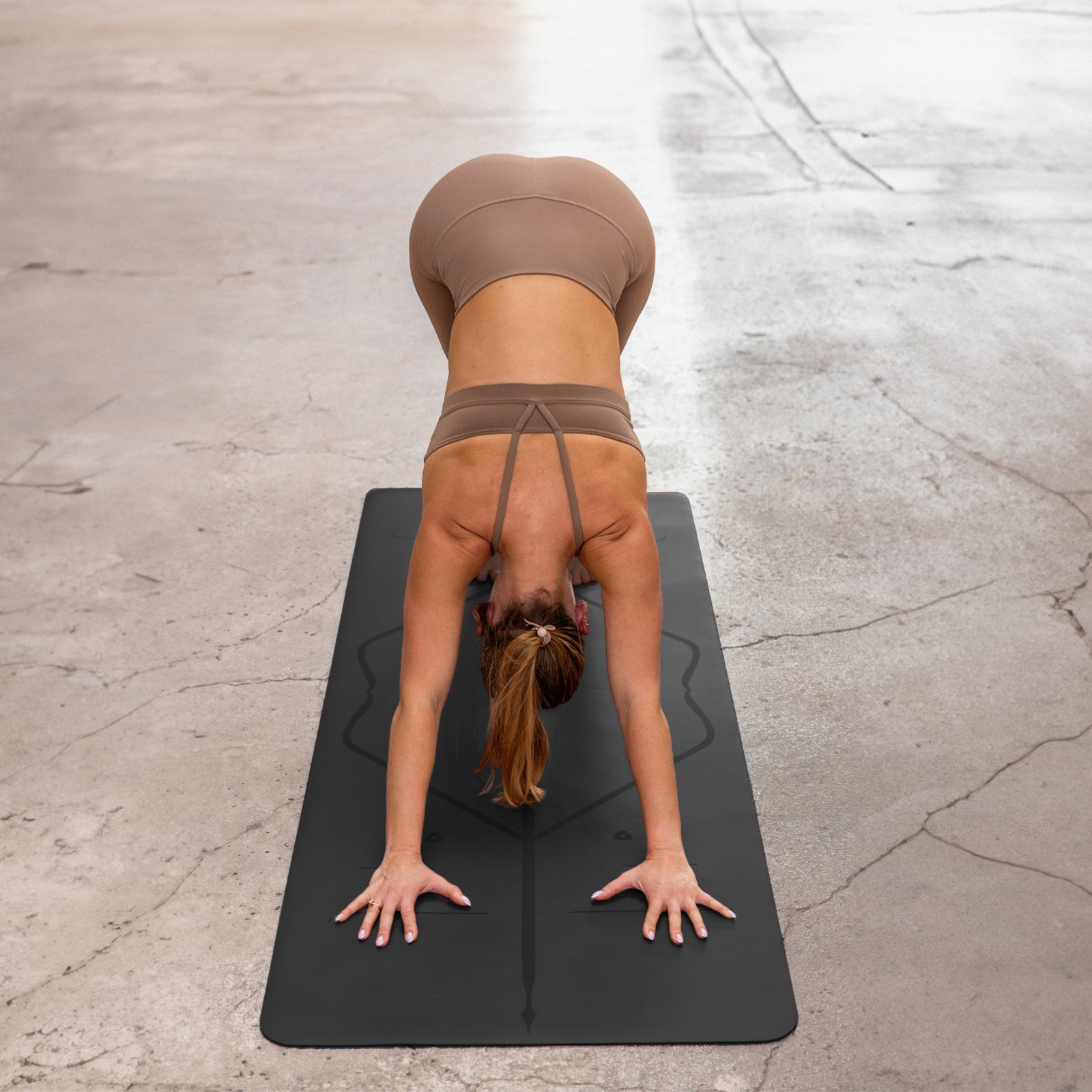
Quick Verdict: Who Is Liforme For?
Liforme makes the most sense for people who value grip, visual alignment cues and a generous practice surface enough to accept premium pricing and extra carrying weight. The Classic mat is a home, studio, cabin or car-camping option rather than a packable trail mat. The Travel version trims both thickness and weight, but at roughly 1.6 kilograms it still belongs in a suitcase, camper van or vehicle—not an ultralight backpack.
The key strength is not portability alone. It is the combination of a stable rubber base, the GripForMe surface and the AlignForMe markings. That package can be valuable when fatigue after a long day makes position and balance less consistent. The limitations are equally practical: natural rubber is heavy, the grippy surface needs sensible cleaning, and neither version should be treated like a disposable groundsheet.
What Makes a Liforme Mat Different?
The Liforme Classic Yoga Mat is listed at approximately 185 by 68 centimetres, 4.2 millimetres thick and 2.5 kilograms. Those figures explain the experience more clearly than marketing language. It is longer and wider than many basic mats, substantial underfoot and large enough for broad stances or longer bodies. The trade-off is bulk: carrying it across an airport is possible with the included bag, but taking it several kilometres down a trail is difficult to justify.
Liforme’s Travel mat is approximately 180 by 66 centimetres, about 2 millimetres thick and around 1.6 kilograms. It preserves the core grip and alignment concept in a slimmer format. That makes it easier to pack for a yoga retreat, road trip or flight, though users who need knee cushioning may want a folded towel or small knee pad for hard surfaces.
GripForMe: Useful When Heat and Effort Build
Liforme describes its GripForMe top layer as moisture-absorbing and designed for traction during sweaty practice. That matters for warm-weather travel, heated classes and recovery sessions after a hike, when hands may already be damp. A stable hand position can make downward-facing poses and longer holds feel more controlled.
Grip should still be understood as part of a system. The ground beneath the mat must be flat, the underside must be clean, and the surface should be allowed to dry after use. Fine dust, sand, sunscreen and skin oils can change how any mat feels. On an outdoor trip, shake loose debris off before rolling the mat and avoid placing the practice surface directly onto gritty soil.
Shoppers interested in the surface technology can compare Liforme’s Classic, Travel and patterned mat options here. The decorative designs vary, but the practical decision should begin with size, thickness and carrying weight.
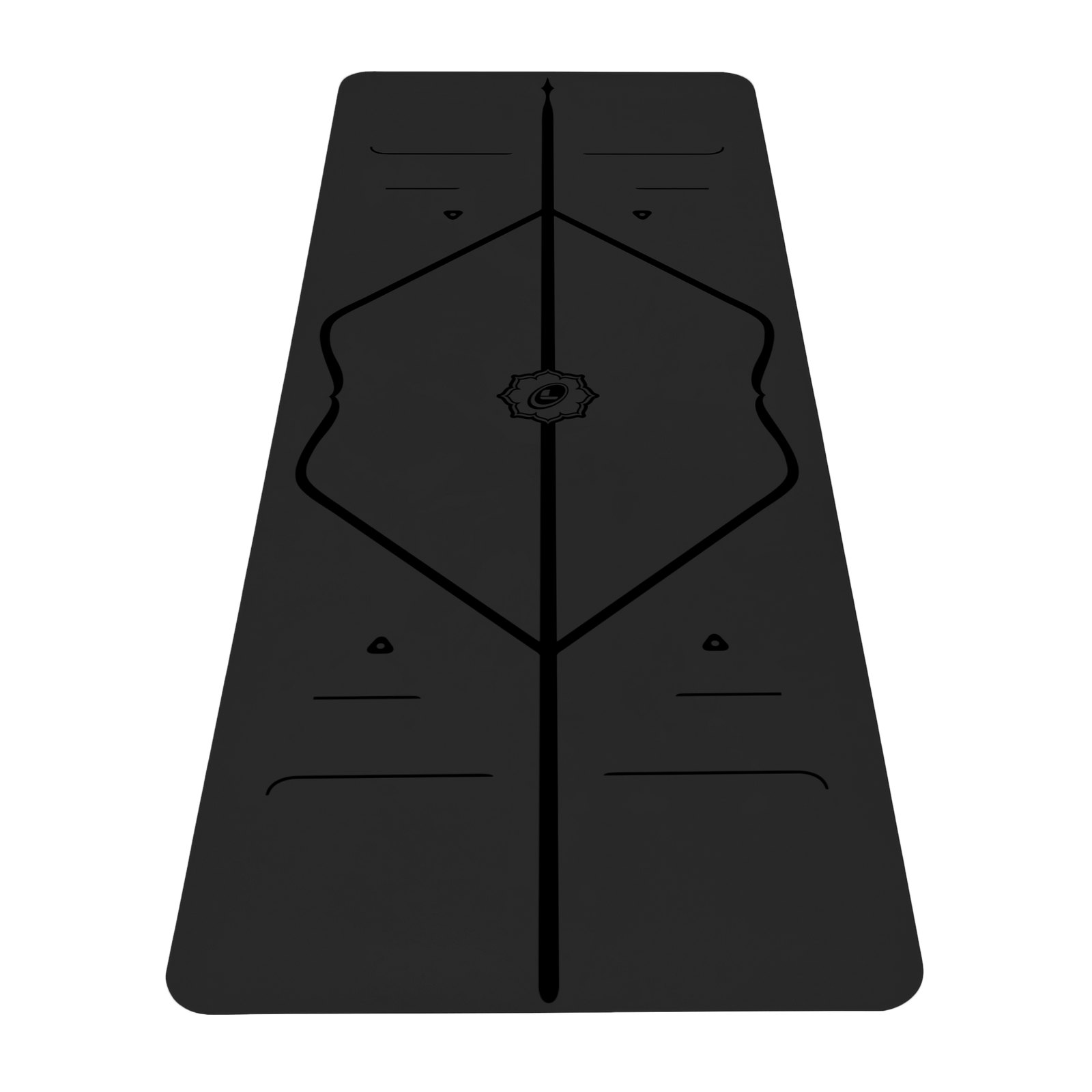
AlignForMe: A Reference System, Not an Instructor
The AlignForMe design uses a centre line and position markers to help users notice symmetry, stance width and hand or foot placement. For solo sessions, these marks provide a repeatable visual reference. That can be helpful in a hotel room or quiet campsite where there is no mirror and no instructor watching form.
The system should not be treated as a universal prescription. Bodies differ in height, limb length, mobility and injury history. A printed marker cannot determine whether a position is safe for a particular person, and forcing hands or feet onto a line can be counterproductive. The best use is observational: compare left and right, notice drift, then adapt the pose to your body.
After hiking, ankles, calves and hips may be fatigued. Use the markings to slow down and check symmetry, but reduce range rather than chasing the same positions you use when fresh.
Classic vs Travel: Which Format Fits Your Trip?
| Question | Liforme Classic | Liforme Travel |
|---|---|---|
| Best setting | Home base, studio, cabin, camper van and car camping | Flights, retreats, hotels, road trips and frequent studio commuting |
| Approximate size | 185 × 68 cm | 180 × 66 cm |
| Approximate thickness | 4.2 mm | 2 mm |
| Approximate weight | 2.5 kg | 1.6 kg |
| Main advantage | More cushioning and a generous stable surface | Less bulk while retaining Liforme’s grip and alignment layout |
| Main compromise | Heavy for transit or long walks | Less comfort on hard or uneven ground |
For vehicle-based trips, the Classic is easier to recommend because there is little reason to sacrifice cushioning when the mat is travelling in a boot or storage compartment. For flights and train journeys, the Travel model is more manageable. Neither is designed to replace a sleeping mat, insulated camp pad or protective groundsheet.
You can check the current Liforme sizes, colours and travel formats before choosing. Pay particular attention to the packed dimensions and airline baggage limits rather than relying on the word “travel.”
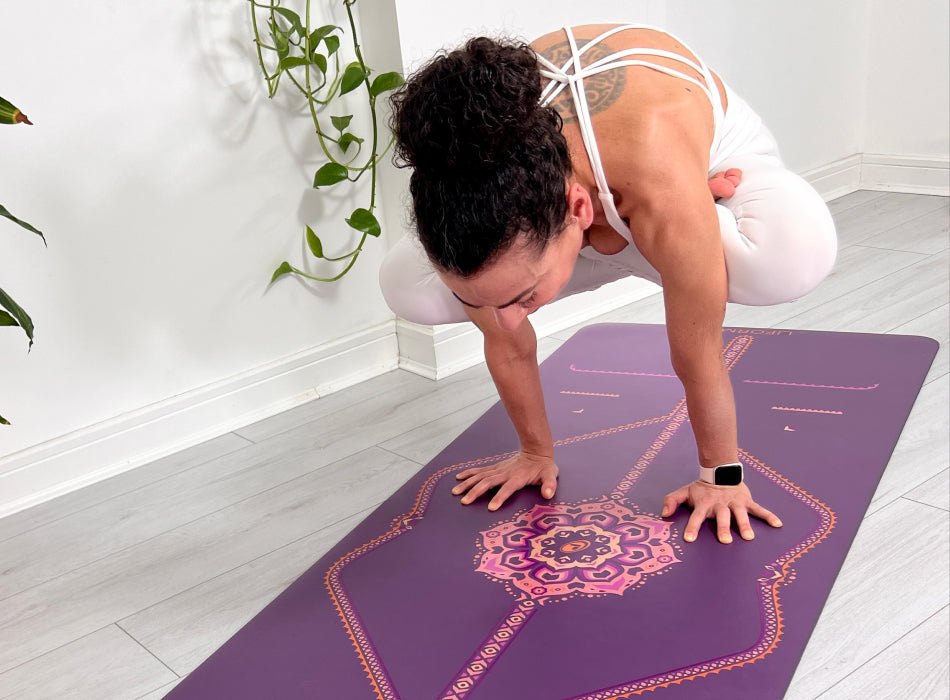
Where It Works Outdoors—and Where It Does Not
Good match
A clean deck, cabin floor, sheltered terrace, smooth campsite platform or flat patch of short dry grass over a protective footprint.
Use caution
Rough concrete, gravel, resinous decking, damp ground or dusty surfaces that can mark the mat or reduce grip.
Wrong tool
Sleeping insulation, muddy tent entry, beach groundsheet, fire-side floor protection or any task involving sharp stones and sparks.
Natural-rubber mats are flexible, but they are not outdoor tarps. Before unrolling, sweep the area with a hand or cloth and feel for stones, thorns and splinters. If the ground is questionable, place a clean footprint or blanket underneath while keeping the Liforme practice surface on top. Do not leave the mat baking in strong sun inside a vehicle or exposed to rain while camp is unattended.
A short mobility routine often needs less space than a full flow. On compact trips, use the mat for kneeling work, calf stretches, hip rotations and breathing practice rather than forcing a large sequence into an unsafe area. The mat is most useful when it creates consistency, not when carrying it becomes another logistical problem.
Materials, Cleaning and Trip Care
Liforme states that its mats use sustainably sourced natural rubber and a proprietary eco-polyurethane top layer, are PVC-free and Vegan Certified. The company also describes the mats as designed to biodegrade under normal landfill conditions over time. Those points are relevant, but durability still depends on care and use.
For travel, the simplest routine is preventive. Practise with clean hands and feet, keep lotions or insect repellent away from the surface, wipe marks according to Liforme’s current care guidance and let the mat dry fully before rolling. Avoid aggressive household cleaners unless the manufacturer specifically approves them. A damp rolled mat stored in a hot car is an avoidable test of both hygiene and materials.
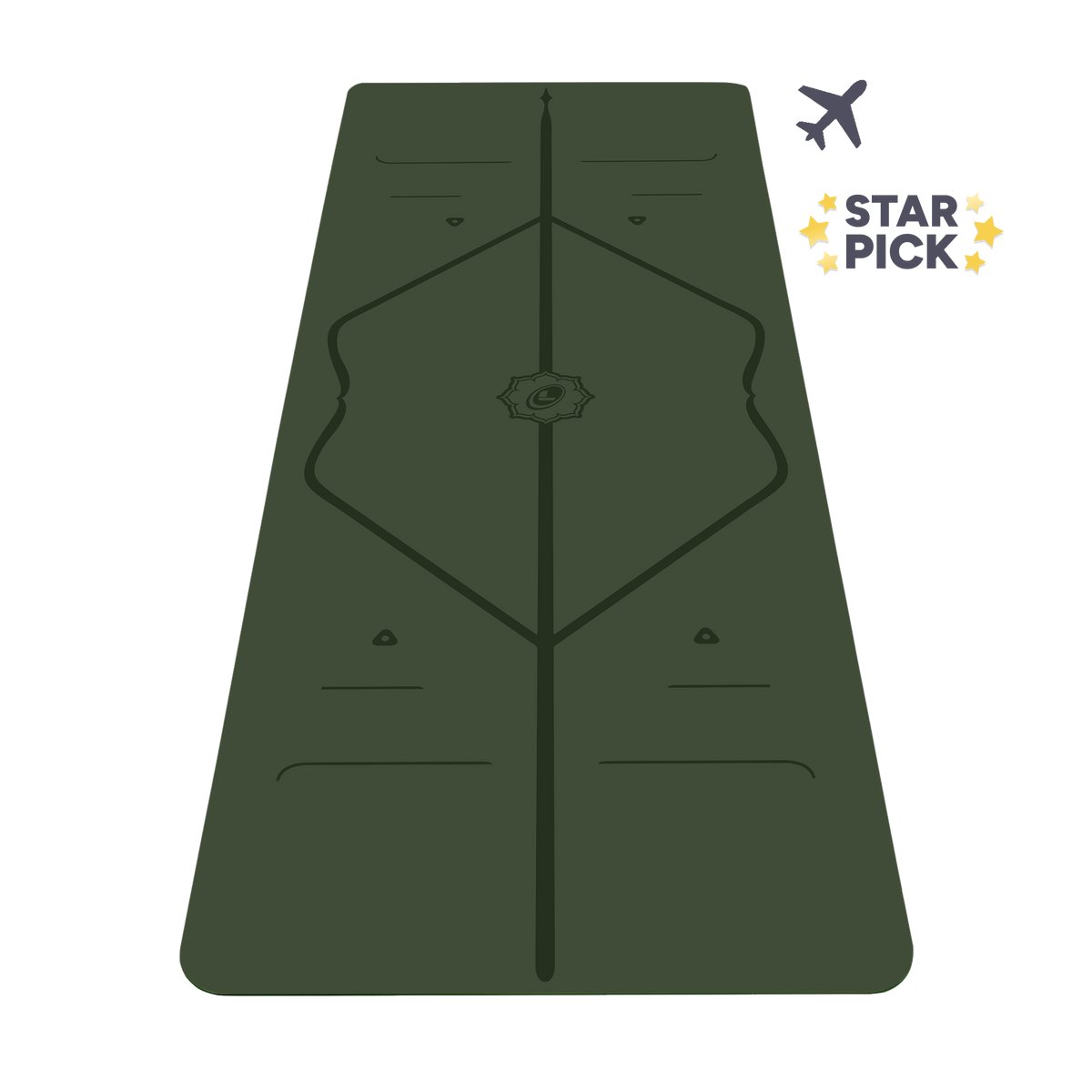
Who Should Buy a Liforme Mat?
Liforme is a strong fit for committed yoga practitioners who travel by car, attend retreats, split time between home and studio, or want a dependable recovery surface at a cabin or holiday rental. The alignment guide can also appeal to beginners who like visual reference points, provided they understand that the marks are guidance rather than anatomical rules.
It is less convincing for occasional stretching, strict budgets or trips where every gram matters. A premium mat is hard to justify if it spends most of its life in storage, and the Travel model is still substantially heavier than the minimal gear carried for backpacking. People sensitive to natural rubber should also review material information carefully before ordering.
Advantages
- Strong emphasis on wet and dry grip
- Useful alignment reference system
- Generous Classic dimensions
- Regular and lighter Travel formats
- Mat bag included with the reviewed formats
- PVC-free, natural-rubber-based construction
Limitations
- Premium purchase price
- Classic mat is heavy for travel
- Travel mat offers less cushioning
- Not suitable as a rough-use groundsheet
- Surface requires sensible cleaning and storage
- Natural rubber will not suit every user
A Practical Buying Decision
Start with transport. If the mat will stay at home, in a studio or in a car, choose based on cushioning and practice space. If it must pass through airports or move between accommodation regularly, compare the Travel model’s reduced weight with the comfort you need. If it must be carried on foot for hours, reconsider taking a full yoga mat at all.
Next, decide whether grip and alignment are genuine priorities. Liforme’s premium is easier to understand when sweaty practice, consistent hand placement and a larger surface are central to the routine. If your goal is five minutes of basic stretching after a walk, a simpler mat may deliver better value.
When you know the format you need, review Liforme’s live product specifications and available designs. Recheck dimensions, materials, delivery timing and current return terms before checkout.
Final Recommendation
Liforme is not an ultralight outdoor brand, and that distinction is useful. Its mats are premium practice tools that can travel when the journey supports them. The Classic version is best viewed as basecamp, cabin, camper-van or home-studio equipment. The Travel mat is the more practical companion for retreats, hotels and transport-heavy itineraries, though it still asks for meaningful luggage space.
For the right user, the appeal is coherent: a grippy top, stable rubber foundation, generous dimensions and visible alignment references in a polished package. For the wrong trip, the weight and care requirements will overwhelm those benefits. Choose it when regular practice is part of the itinerary—not simply because a mat looks adventurous in a photograph.
Check current sizes, colours, pricing, shipping and terms directly on Liforme.