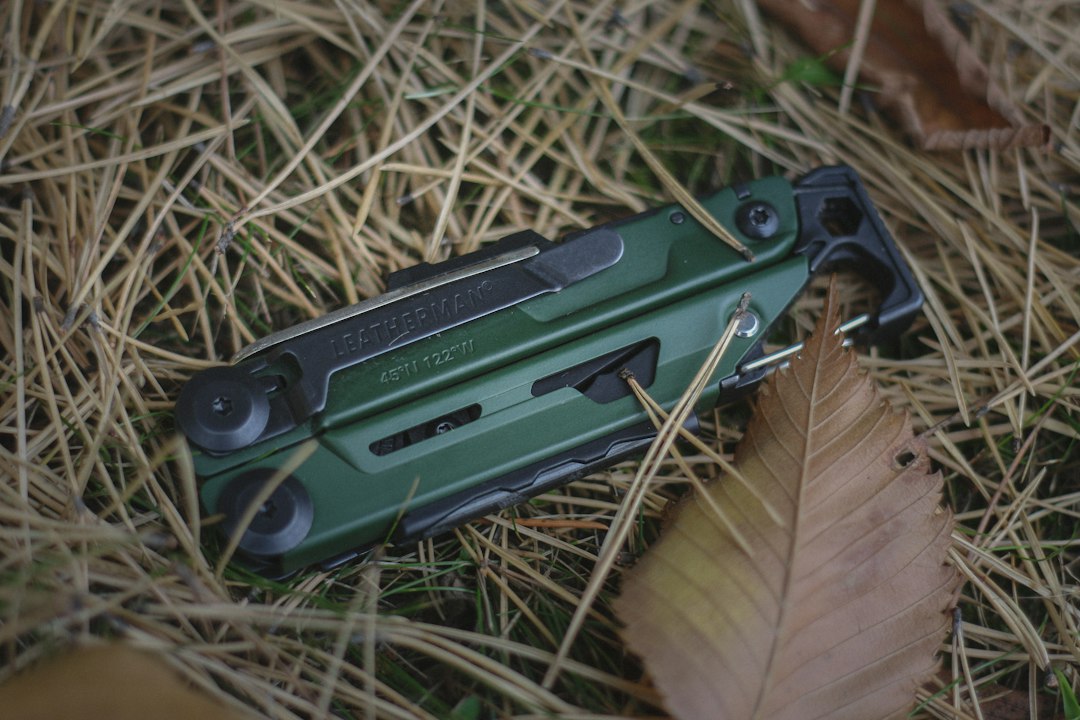
Estimated US price: approximately $100–$150, depending on retailer, color, promotion, and included carry configuration. The standard Signal is listed at roughly $150, while discounted examples commonly fall below that level.
What the Leatherman Signal Is Actually For
The Signal is not a pocket-sized survival fantasy. It is a conventional full-size Leatherman platform modified for camping, hiking, hunting, vehicle recovery, and backcountry emergencies. The design retains the practical backbone expected from a serious multi-tool: needlenose and regular pliers, a locking 420HC combo blade, wood saw, awl, bit drivers, bottle opener, can opener, hammer surface, and replaceable diamond-coated sharpener. Around that chassis, Leatherman adds two purpose-built emergency features: a ferrocerium fire starter and a whistle.
That distinction matters. The Signal does not make a user fireproof, self-sufficient, or immune to poor preparation. It gives a competent outdoorsperson several compact tools in one corrosion-resistant package, with enough redundancy to solve common field problems. The survival angle is strongest when the tool is carried as part of a broader system containing tinder, a lighter, navigation equipment, insulation, water treatment, and a proper first-aid kit.
At 4.5 inches closed and approximately 7.5 ounces, the Signal is substantial but still reasonable on a belt, pack strap, or equipment pouch. It is heavier than a basic Swiss Army knife and less specialized than a dedicated bushcraft knife. Its advantage is breadth: a single tool can cut cordage, pull wire, tighten hardware, strike a ferro rod, signal across terrain, and handle light camp maintenance without filling a pocket with separate implements.

The Signal earns its weight through tool variety, not through one oversized survival component.
The mechanical architecture is familiar and confidence-inspiring. Most implements lock open, and the external tools can be reached without fully deploying the pliers. That is valuable when wearing gloves, working from a kneeling position, or handling a task where repeatedly opening and closing the entire tool is awkward. The drawback is equally clear: the Signal is a compact compromise machine. Each survival feature has been engineered to fit inside the handles, so none has the authority of its full-size counterpart.
The Ferro Rod: Useful Backup, Not a Magic Fire Button
The Signal’s ferrocerium rod is the feature that gives the tool its strongest survival identity. Ferrocerium produces hot sparks when scraped with a sufficiently hard edge, and it remains usable when a lighter is wet, empty, or damaged. Leatherman makes the rod removable, which is the correct design decision: fire-starting works better when the rod can be held at a useful angle and the scraper can be controlled independently.
The rod is integrated with the emergency whistle housing, creating a compact removable module. Official specifications identify the ferrocerium rod as a dedicated Signal component, while independent reviews describe it as replaceable. Replacement matters because ferro rods are consumable. Every scrape removes material, and careless scraping can shorten the rod’s useful life quickly.
In practical terms, the Signal rod is capable of starting a fire, but success depends heavily on preparation. A spark landing on damp bark, green wood, or a loosely assembled pile of oversized fuel is not a fire. The reliable sequence is to prepare fine, dry tinder first, expose pencil-thin kindling, shield the work area from wind, and then scrape the rod with short, forceful passes. Cotton fiber, resin-rich shavings, dry grass, birch bark, and purpose-made tinder all give the small rod a fair chance. Wet conditions demand more tinder and more patience, not more confidence.
The main limitation is scale. Reviewers have noted that the rod does not throw a particularly large spark, and its compact dimensions leave less material and leverage than a dedicated ferro rod. That does not make it ornamental; it makes technique non-negotiable. The Signal works best when the scraper is held firmly and the rod is pulled back through it, sending sparks toward the tinder without disturbing the nest. A novice who pushes a loose scraper across the rod may produce weak, scattered sparks and conclude that the tool is defective.
Evidence Notes: Getting More from the Ferro Rod
- Carry a dedicated tinder source; the tool supplies sparks, not dry fuel.
- Build the tinder nest before striking the rod.
- Use the rod close to the tinder so weak sparks do not die in the air.
- Pull the rod backward while keeping the scraper stationary for better control.
- Protect the tinder from wind with the body, a jacket, or a natural windbreak.
- Inspect the rod periodically and replace it before the exposed material becomes too short to handle safely.
There is also a training issue. The Signal’s fire starter is most valuable when practiced before an emergency. Fire-making under rain, cold, fatigue, and darkness is a different task from striking a rod beside a dry backyard fire pit. Practice should include natural tinder, artificial tinder, gloves, and restricted hand movement. The objective is not to perform a trick; it is to create a repeatable process that still works when fingers are numb.
Compared with a disposable lighter, the ferro rod is slower and more demanding. Compared with stormproof matches, it is reusable but less immediately convenient. Compared with a large dedicated ferro rod, it offers less material and poorer ergonomics. Its proper place is as a durable backup integrated into a tool already being carried. For day hikes, vehicle kits, and general camping, that is a sensible trade. For winter expeditions or remote travel, it should supplement rather than replace a primary lighter and a second fire source.
The Whistle: Small, Loud, and More Important Than It Looks
The Signal’s emergency whistle is molded into the removable ferro-rod assembly, an efficient use of space that keeps the signaling tool accessible without adding another loose item to the kit. A whistle can outperform shouting over distance because it produces a sharp, repetitive sound with far less physical effort. It can also be used when injured, cold, disoriented, or trapped, situations in which sustained yelling rapidly becomes ineffective.
The whistle’s value depends on context. In open terrain, sound can carry farther than a voice, especially when rescuers are searching from a distance or visibility is poor. In dense forest, ravines, heavy wind, or noisy water, sound may become difficult to locate. A whistle is therefore a locator aid, not a guarantee of discovery. The standard survival signal is commonly taught as three repeated blasts, followed by a pause and repetition, although local rescue guidance should take priority.
Several reviews have described the Signal whistle as awkward or tricky to use. The issue is not that the feature lacks purpose; it is that the whistle is tiny and shares space with the ferro rod. Users should practice removing the module, orienting it correctly, and producing a clear tone before relying on it. Gloves, cold hands, and poor visibility can turn a simple component into a fumbling exercise.
The whistle is also vulnerable to the same practical problem affecting many compact accessories: loss. If the ferro-rod module is removed for use and placed on the ground, it can disappear in leaves, snow, or grass. The assembly should be kept attached to a lanyard or held securely during an emergency. A whistle that is buried in a pocket while a search party is nearby is no better than a whistle left at home.
The ferro rod and whistle share one removable module, saving space while demanding deliberate handling.
Against a dedicated pealess survival whistle, the Signal is less specialized. A separate whistle can be larger, easier to grip, easier to tether, and simpler to replace. The Signal’s advantage is always-present integration. A dedicated whistle is easy to forget; the one built into a multi-tool has a better chance of being carried every day. For users who already carry a loud standalone whistle on a pack strap, the Signal’s whistle becomes useful redundancy rather than a primary signaling device.
Beyond Fire and Signaling: The Toolset That Makes the Signal Worth Carrying
The ferro rod and whistle attract attention, but the Signal earns its keep through the rest of its toolset. The 420HC combo blade is suited to cutting cordage, packaging, food, small branches, and common camp materials. Its partially serrated edge can handle fibrous material effectively, but sharpening it in the field is more involved than maintaining a plain-edge blade. The included diamond-coated sharpener is a useful emergency accessory, although its small format is better for touch-ups than for rebuilding a badly damaged edge.
The pliers are the workhorse. They can grip hot pot hardware, bend wire, pull splinters, manipulate small fasteners, and perform basic repairs. The integrated wire cutters expand that utility for fencing, snares, gear repairs, and vehicle work. The hammer surface is practical for light striking tasks, such as tent stakes or small repair work, but it is not a substitute for a camp hatchet or a full hammer. Repeated heavy blows can damage the tool, the target, or the user’s hand.
The saw and awl broaden the Signal’s camp usefulness. The saw is appropriate for modest branches and notching tasks, while the awl can punch leather, webbing, and heavy fabric. The bit drivers and integrated wrench functions make the tool relevant to bicycles, stoves, trekking equipment, and vehicle hardware. This is where the Signal separates itself from a fire starter with accessories: it can solve mechanical problems that directly affect shelter, transport, and equipment function.
There are compromises. The Signal lacks the full driver and bit ecosystem associated with some repair-oriented Leatherman models, and the compact implements can be awkward on large fasteners. The combo blade is not the ideal shape for every cutting job, and the pliers must be opened before use. Those limitations are acceptable if the intended role is outdoor generalist rather than workshop replacement.
Survival Feature Comparison
| Feature | Leatherman Signal | Dedicated Alternative | Practical Verdict |
|---|---|---|---|
| Fire starter | Compact removable ferrocerium rod | Large ferro rod, lighter, or stormproof matches | Capable backup; slower than a lighter and less forgiving than a large rod |
| Emergency whistle | Small whistle integrated with ferro-rod module | Dedicated rescue whistle | Convenient and useful; a standalone whistle is easier to grip and tether |
| Cutting | 420HC combo blade and saw | Fixed-blade knife and folding saw | Versatile for light work; less efficient for heavy wood processing |
| Repairs | Pliers, cutters, drivers, awl, wrench functions | Dedicated tool kit | Excellent range for field repairs, with limited leverage |
Carry, Durability, and Daily Discipline
A survival tool only matters if it is carried. At approximately 7.5 ounces and 4.5 inches closed, the Signal occupies more belt and pocket space than minimalist multi-tools, but the weight is reasonable for a full-size outdoor model. Its carabiner and pocket-carry options make attachment straightforward, while a sheath offers more secure belt carry. External access to several tools improves readiness because the user does not need to unfold the pliers every time a blade, saw, sharpener, or signaling component is needed.
Durability is supported by the stainless-steel construction, locking implements, and Leatherman’s established limited warranty. The warranty is not permission to abuse the tool as a pry bar, axe, or heavy demolition implement. Pliers can be twisted, drivers can be overloaded, and locking mechanisms can be contaminated by grit. After saltwater exposure, wet-weather use, or muddy work, the Signal should be rinsed appropriately, dried completely, and lubricated at pivot points according to the manufacturer’s care guidance.
The ferro rod deserves separate maintenance. It should remain clean and dry enough to produce consistent sparks, and its retaining area should be checked for packed dirt. The whistle opening must remain unobstructed. A tiny amount of mud can silence a signaling device at exactly the wrong moment. These are not glamorous maintenance tasks, but survival equipment fails most often through neglect, not dramatic engineering collapse.
Evidence Notes: Carry and Maintenance
- Carry the Signal where it can be reached with either hand.
- Secure the removable ferro-rod and whistle module before moving through brush or snow.
- Keep a separate lighter or match system in a dry pocket.
- Inspect blade lockup, plier pivots, wire cutters, and tool retention before a trip.
- Clean grit from the whistle opening and ferro-rod mount.
- Do not use the hammer surface or drivers beyond their sensible mechanical limits.
Pros and Cons
👍 Pros
- Ferro rod and emergency whistle are integrated into a tool that is likely to be carried.
- Removable fire-starting module allows better control than a fixed-in-handle rod.
- Broad set of locking tools for camp, vehicle, and gear repairs.
- Compact 4.5-inch closed length and approximately 7.5-ounce weight.
- Replaceable ferro rod and whistle assembly.
- Useful combination of pliers, cutters, blade, saw, drivers, awl, and hammer surface.
👎 Cons
- The small ferro rod produces less spark and offers less leverage than a dedicated model.
- Fire-starting success depends heavily on dry, prepared tinder.
- The whistle can be awkward to orient and use under stress.
- The combo blade and compact drivers are compromises for specialized work.
- At an estimated $100–$150, it costs more than a basic multi-tool plus inexpensive emergency accessories.
- The survival features should not replace a dedicated lighter, whistle, or larger cutting tool on serious trips.
Verdict: A Credible Backup System, Not a Complete Survival Kit
The Leatherman Signal gets the important idea right: survival equipment is most useful when it is attached to the gear already carried. Its ferro rod is not the fastest way to light a fire, and its whistle is not the easiest rescue whistle to use. Yet both are materially better than having no fire source or signaling device at all. Their presence is backed by a practical multi-tool platform that can repair equipment, cut material, manipulate wire, process modest wood, and handle the small mechanical failures that turn an easy outing into a difficult one.
The ferro rod deserves a clear rating: competent, compact, and entirely dependent on technique and tinder. It should be treated as a second-line fire source. Carrying a lighter, waterproof tinder, and a larger fire starter remains the disciplined approach for cold, wet, or remote travel. The whistle earns a similar Verdict. It is a valuable integrated locator aid, but a dedicated whistle on the shoulder strap is easier to access and operate.
For hikers, campers, hunters, overlanders, and outdoor workers who want one serious generalist tool with built-in emergency capability, the Signal remains a strong purchase in the approximate $100–$150 US range. The price is justified by the breadth of the package and the quality of the platform, not by the ferro rod or whistle alone. Buyers seeking maximum fire performance should choose a dedicated rod; buyers seeking maximum signaling performance should carry a dedicated whistle; buyers seeking a compact, durable field tool that includes both should find the Signal compelling.
The final judgment is straightforward: the Signal is best understood as a repair tool with credible survival functions, not a survival kit disguised as a multi-tool. Carry it, practice with it, maintain it, and pair it with proper tinder, a primary lighter, navigation equipment, insulation, water treatment, and first aid. Used that way, the ferro rod and whistle are not gimmicks. They are small, defensible layers of redundancy in a tool designed for the real world.

The Signal is strongest as one layer in a properly assembled outdoor safety system.