
| Rank | Trek | Region | Typical Duration | Highest Point | Highest Sleeping Elevation | Difficulty | Best for | Guide Recommendation |
|---|---|---|---|---|---|---|---|---|
| 1 | Huayhuash Circuit | Cordillera Huayhuash | 8-12 days | 6,768 m (22,205 ft) – Yerupajá | 4,600 m (15,092 ft) | Very Strenuous | Alpine scenery, remote wilderness | Essential |
| 2 | Alpamayo Circuit | Cordillera Blanca | 7-10 days | 4,950 m (16,240 ft) – various passes | 4,400 m (14,436 ft) | Strenuous | Glacier and lake scenery, iconic peaks | Highly Recommended |
| 3 | Ausangate Circuit | Cordillera Vilcanota (near Cusco) | 6-9 days | 5,230 m (17,160 ft) – Palccoyo Pass | 4,600 m (15,092 ft) | Strenuous | High-altitude landscapes, cultural immersion, Rainbow Mountain | Highly Recommended |
| 4 | Santa Cruz Trek | Cordillera Blanca | 3-4 days | 4,750 m (15,584 ft) – Punta Unión Pass | 4,200 m (13,780 ft) | Moderate to Strenuous | Introduction to Cordillera Blanca, accessible | Recommended |
| 5 | Choquequirao to Machu Picchu | Vilcabamba Range | 4-5 days | 3,270 m (10,728 ft) – Choquequirao | 2,100 m (6,890 ft) (Machu Picchu) | Very Strenuous (due to extreme elevation changes) | Archaeology, challenging ascents/descents | Essential |
| 6 | Salkantay Trek | Vilcabamba Range (near Cusco) | 5 days | 4,650 m (15,256 ft) – Salkantay Pass | 4,200 m (13,780 ft) | Strenuous | High mountain passes to Machu Picchu, diverse scenery | Recommended |
| 7 | Vilcabamba Traverse | Vilcabamba Range | 7-10 days | 4,700 m (15,420 ft) – various passes | 4,000 m (13,123 ft) | Strenuous | Wilderness, remoteness, experienced hikers | Highly Recommended |
| 8 | Ancascocha Trek | Cordillera Vilcanota (near Cusco) | 3-4 days | 4,700 m (15,420 ft) – Ancascocha Pass | 4,200 m (13,780 ft) | Moderate to Strenuous | Inca Trail alternative, high passes, cultural | Recommended |
| 9 | Lares Trek | Lares Valley (near Cusco) | 3-4 days | 4,450 m (14,600 ft) – Ipsaycocha Pass | 4,000 m (13,123 ft) | Moderate | Cultural immersion, villages, weaving | Recommended |
| 10 | Qoyllur Riti & Sinakara Valley | Cordillera Vilcanota | 3-5 days (variable) | 4,700 m (15,420 ft) – Sinakara Pass | 4,400 m (14,436 ft) | Moderate to Strenuous (religious pilgrimage) | Cultural, spiritual, unique festival | Recommended (especially during festival) |
1. Huayhuash Circuit — Peru’s Ultimate High-Altitude Alpine Loop
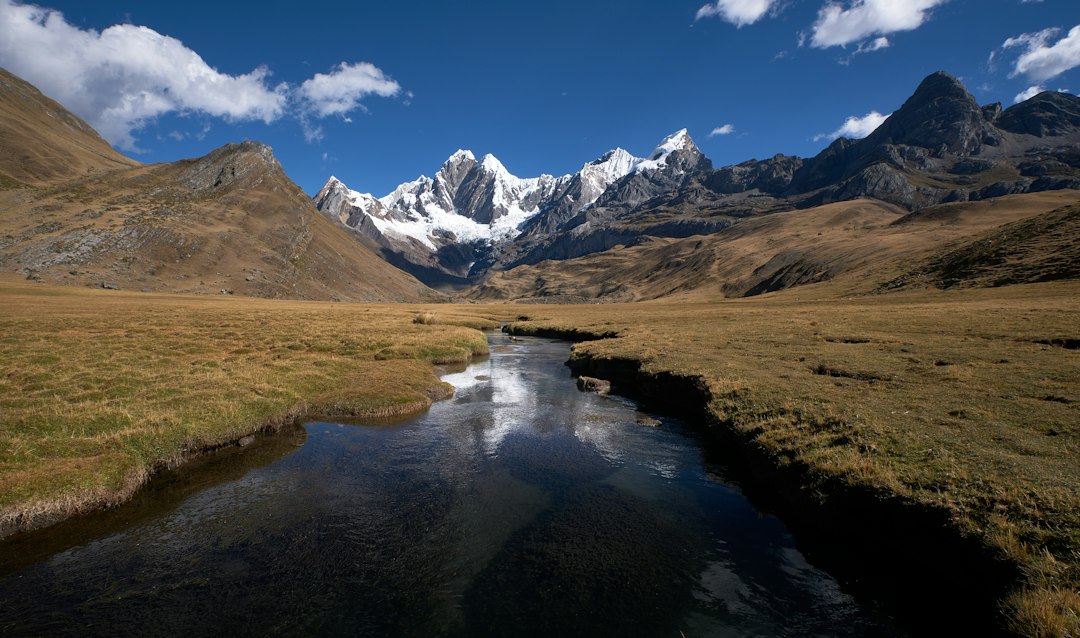
The Huayhuash Circuit is unequivocally the crown jewel of high-altitude trekking in Peru, offering an unparalleled immersion into a raw, glaciated alpine landscape. This route is not for the faint of heart; it consistently pushes trekkers to their physical and mental limits, rewarding them with views that are nothing short of spectacular. Each day presents a new panorama of jagged peaks, turquoise lakes, and expansive ice fields, making it a photographer’s and mountaineer’s dream.
Huayhuash Circuit
⚖️ Typical Duration: 8-12 days
🔋 Highest Point: 6,768 m (Yerupajá)
👍 Pros
- Unrivaled alpine scenery with glaciers and turquoise lakes.
- Extreme remoteness and a true wilderness experience.
- Challenging passes offer a significant sense of accomplishment.
- Spectacular views of some of Peru’s highest peaks.
👎 Cons
- Extreme altitude requires thorough acclimatization and fitness.
- Logistically demanding, often requiring pack animals and guides.
- Weather can be unpredictable and harsh, with snow possible year-round.
- Can be physically taxing with multiple high passes.
The Cordillera Huayhuash is known for its dramatic, rugged terrain, featuring numerous peaks over 6,000 meters. Treks here typically involve crossing multiple high passes, often above 4,500 meters, with camping at high elevations. Local guides are essential for navigation, safety, and logistical support, including arranging pack animals for gear. Acclimatization in Huaraz or nearby lower-altitude areas is crucial before commencing the circuit.
The full circuit typically spans 10-12 days, covering approximately 120-140 kilometers. It involves crossing passes like Portachuelo de Huayhuash (4,730m) and San Antonio Pass (4,990m), each offering breathtaking vistas. The highest point of the circuit is the summit of Yerupajá, Peru’s second-highest peak, though trekkers do not summit it but pass nearby its imposing massif. Camping often occurs at altitudes exceeding 4,200 meters, demanding robust acclimatization.
For those seeking a slightly less demanding, yet still incredibly scenic, experience, partial circuits or variations exist. The Viconga variation, for instance, allows trekkers to experience some of the highlights without completing the full loop. These options can shorten the duration to 7-8 days. Regardless of the chosen route, the Huayhuash circuit demands respect for the altitude and the environment. It is best suited for experienced trekkers with a proven ability to handle high-altitude conditions and a desire for a truly wild mountain adventure.

2. Alpamayo Circuit — The Most Dramatic Glacier-and-Lake Trek
While the Huayhuash Circuit offers a broader alpine experience, the Alpamayo Circuit focuses on concentrated, jaw-dropping glacial and lake scenery, anchored by the iconic, pyramid-shaped Alpamayo peak. This trek is renowned for its visual intensity, presenting postcard-perfect views at nearly every turn. It’s a more focused visual feast compared to the expansive wilderness of the Huayhuash.
Alpamayo Circuit
⚖️ Typical Duration: 7-10 days
🔋 Highest Point: Approx. 4,950 m (various passes)
👍 Pros
- Stunning views of Alpamayo, often cited as one of the world’s most beautiful mountains.
- Abundant turquoise lakes and dramatic glaciers.
- More accessible than Huayhuash for some, with varied route options.
- A photographer’s paradise with consistent, high-quality scenery.
👎 Cons
- High passes and sustained high-altitude trekking.
- Requires good acclimatization and physical conditioning.
- Can be crowded during peak season due to its popularity.
- Logistics similar to Huayhuash, often requiring guides and pack animals.
The Alpamayo Circuit, primarily within the Cordillera Blanca, offers trekkers close-up encounters with glaciers and pristine alpine lakes. Key highlights include views of Alpamayo (2nd highest peak in the Cordillera Blanca), Artesonraju, and other significant peaks. Treks usually involve crossing passes above 4,500 meters, demanding a good level of acclimatization. Local outfitters in Huaraz provide comprehensive support, including guides, cooks, and muleteers with pack animals, which are crucial for carrying gear and equipment.
This circuit typically takes between 7 and 10 days to complete. While there isn’t one single “official” Alpamayo Circuit, most routes traverse valleys like Quebrada Alpamayo and Quebrada Carhuascancha, culminating in views of Alpamayo and its surrounding glacial amphitheater. Trekkers will likely cross passes such as Alto de Puna (4,700m) or other unnamed high points that can reach up to 4,950 meters. The highest camping elevations are usually around 4,400 meters.
The primary challenge lies in the sustained high altitude and the physical demands of ascending to and descending from high passes. What sets Alpamayo apart is the sheer concentration of iconic Andean beauty. It’s a trek that rewards meticulous preparation with arguably some of the most photogenic mountain scenery on the planet. While it shares logistical needs with Huayhuash, its visual focus on Alpamayo makes it a distinct and highly sought-after high-altitude objective.
3. Ausangate Circuit — The Best High-Altitude Landscapes Near Cusco
The Ausangate Circuit offers a profound high-altitude experience in the Cordillera Vilcanota, accessible from Cusco but feeling worlds away. This trek circles the immense, sacred Ausangate mountain (6,384m), traversing landscapes characterized by vibrant mineral deposits, glaciers, and herds of llamas and alpacas. It’s a journey through a raw, high-altitude environment that is surprisingly accessible from Peru’s most famous tourist hub.
Ausangate Circuit
⚖️ Typical Duration: 6-9 days
🔋 Highest Point: Approx. 5,230 m (Palccoyo Pass)
👍 Pros
- Stunning, unique high-altitude landscapes with colorful mineral deposits.
- Close proximity to Ausangate, a sacred and imposing mountain.
- Opportunity to see traditional Andean life, llamas, and alpacas.
- The famous Rainbow Mountain (Vinicunca) can be visited as part of or near the trek.
- Sustained high altitude provides excellent acclimatization benefits.
👎 Cons
- Consistently high altitude, rarely dropping below 4,000 meters.
- Requires significant acclimatization, ideally before starting.
- Weather can be extreme and unpredictable.
- Logistically challenging, usually requiring guides and pack animals.
The Ausangate trek circles the Apu Ausangate, a significant mountain deity in local Quechua culture. The trek is known for its vibrant geological formations, including the Rainbow Mountain (Vinicunca) and Palccoyo Rainbow Mountains. Trekkers often encounter high passes, with some routes reaching over 5,000 meters. Camping is typically done at altitudes around 4,200-4,600 meters. Due to the extreme altitude and remoteness, hiring local guides and porters or muleteers for pack animals is strongly advised for safety and logistical support.
Most Ausangate treks take between 6 and 9 days, covering a substantial distance and significant elevation gain and loss. Passes like the Palccoyo Pass (5,230m) or Anta Pass (5,000m) are common. The trek’s defining characteristic is that it stays at very high altitudes for its duration, offering a continuous high-altitude immersion. This makes it an excellent trek for those seeking to test their limits at extreme elevations while experiencing unique geological wonders.
While often considered less technically demanding than the Huayhuash, the Ausangate Circuit’s sustained high altitude makes it exceptionally challenging. It’s particularly appealing for trekkers who want to experience the stark beauty of the high Andes near Cusco without the intense crowds of Machu Picchu. The presence of Rainbow Mountain within the trekking region adds a significant draw, although visiting it requires careful planning to manage altitude and crowds. This trek is for the resilient, those who thrive in thin air and appreciate stark, colorful mountain landscapes.

4. Santa Cruz Trek — The Best High-Altitude Introduction in the Cordillera Blanca
The Santa Cruz Trek is a popular and relatively accessible introduction to the stunning Cordillera Blanca. This 3- to 4-day trek offers a fantastic taste of high-altitude Andean scenery, including glacial lakes, towering peaks, and high passes, without the commitment or extreme altitude of longer, more remote circuits like Huayhuash. It’s an ideal choice for those with limited time or who are new to multi-day high-altitude trekking.
Santa Cruz Trek
⚖️ Typical Duration: 3-4 days
🔋 Highest Point: 4,750 m (Punta Unión Pass)
👍 Pros
- Spectacular scenery of the Cordillera Blanca in a short timeframe.
- Relatively accessible and well-trodden route.
- Excellent introduction to high-altitude trekking.
- Stunning views from Punta Unión Pass.
- Logistically simpler than longer treks.
👎 Cons
- Can be crowded due to its popularity.
- The highest pass is still at a significant altitude (4,750m).
- Limited cultural interaction compared to other treks.
- May feel too short or not remote enough for serious altitude trekkers.
The Santa Cruz Trek is a classic route in the Cordillera Blanca, typically running between the Quebrada Llanganuco and Quebrada Santa Cruz valleys. It’s known for its stunning vistas of peaks like Alpamayo, Artesonraju, and Huascarán. The trek crosses the Punta Unión Pass at 4,750 meters, offering panoramic views. While it’s possible to trek independently, hiring a guide and porters is common and recommended for carrying gear and ensuring safety, especially for less experienced trekkers. Huaraz serves as the primary base for organizing this trek.
The trek commonly starts near the Llanganuco Lakes and ends in the village of Cashapampa, or vice versa, taking 3 to 4 days. The highest point is the Punta Unión Pass (4,750m), which offers breathtaking views of the surrounding snow-capped peaks and valleys. The highest camping elevation is typically around 4,200 meters. This route is significantly more approachable than the Huayhuash Circuit, making it a popular choice for a wide range of fitness levels, provided adequate acclimatization.
For serious high-altitude trekkers, Santa Cruz might serve as an excellent acclimatization trek or a short, scenic option. Its primary limitation is its duration and the sheer number of people on the trail during peak season. However, its reputation as a classic Cordillera Blanca experience is well-deserved, offering dramatic mountain scenery without the extreme commitment required by its more formidable neighbors. It’s a perfect blend of accessibility and awe-inspiring Andean landscapes.
5. Choquequirao to Machu Picchu — The Hardest Trek for Climbs and Descents
The trek from Choquequirao to Machu Picchu is legendary not just for its archaeological significance but for its brutal, relentless elevation changes. This route plunges into the depths of the Apurímac Canyon and then climbs back out, often multiple times. While not strictly a high-altitude trek in the same vein as the Cordillera Blanca routes, the extreme physical exertion and the altitude of Choquequirao itself (3,050m) make it a formidable challenge that tests endurance like few others.
Choquequirao to Machu Picchu Trek
⚖️ Typical Duration: 4-5 days
🔋 Highest Point: 3,270 m (Choquequirao ruins)
👍 Pros
- Exploration of the magnificent and vast Inca ruins of Choquequirao.
- Incredible physical challenge with extreme ascents and descents.
- Travel through remote and wild sections of the Vilcabamba range.
- A sense of genuine adventure and accomplishment.
- Ends at the iconic Machu Picchu.
👎 Cons
- Extremely demanding due to constant, steep climbs and descents.
- The high temperatures in the canyon can be brutal.
- Altitude at Choquequirao is significant (3,050m), but the main challenge is physical exertion.
- Requires significant physical fitness and mental fortitude.
- Logistics can be complex, often requiring guides and porters.
The trek to Choquequirao is often considered one of the most challenging day hikes or multi-day treks in Peru due to its extreme elevation changes. The trail descends steeply into the Apurímac Canyon and then ascends sharply to the Choquequirao ruins. The full trek to Machu Picchu, often called the “Choquequirao-Machu Picchu Trek” or “Lares Traverse alternative,” continues through rugged terrain. The altitude at Choquequirao is around 3,050 meters, but the primary difficulty comes from the thousands of meters of elevation gain and loss over consecutive days. Guides are highly recommended due to the challenging terrain and potential for navigation difficulties.
The journey typically begins with a steep descent into the Apurímac Canyon, followed by a strenuous climb to the sprawling Choquequirao ruins. From there, the trail continues through the Vilcabamba range, often involving further significant ascents and descents before eventually connecting towards the network of trails leading to Machu Picchu. The highest point on the Choquequirao site itself is about 3,050 meters, but the trek involves navigating passes that can reach higher, though the main exertion is the repeated climb out of the canyon.
What makes this trek uniquely difficult is not just the altitude, but the sheer, punishing physical effort required. Temperatures in the canyon can soar, adding to the challenge. It is a trek for those who crave an extreme physical test combined with a deep dive into Inca history and remote Andean landscapes. The reward is immense: exploring one of the most significant and least-visited Inca sites before finishing at the world-renowned Machu Picchu, having earned it through sheer grit.
6. Salkantay Trek — The Best High-Altitude Route to Machu Picchu
The Salkantay Trek is a spectacular alternative to the classic Inca Trail, offering a high-altitude mountain experience that culminates near Machu Picchu. This 5-day trek traverses dramatic Andean landscapes, from glacial passes to cloud forests, providing a diverse and challenging journey. It’s celebrated for its stunning views of snow-capped peaks and its accessibility as a route to the Inca citadel.
Salkantay Trek
⚖️ Typical Duration: 5 days
🔋 Highest Point: 4,650 m (Salkantay Pass)
👍 Pros
- Breathtaking views of Salkantay mountain and surrounding glaciers.
- Crosses a high mountain pass (Salkantay Pass).
- Diverse scenery, transitioning from high mountains to cloud forest.
- A more remote and less crowded experience than the Inca Trail.
- Ends near Machu Picchu, often with a visit to Aguas Calientes.
👎 Cons
- Salkantay Pass is at a very high altitude (4,650m).
- Requires good acclimatization and physical fitness.
- Can be cold and unpredictable weather over the pass.
- More challenging than the standard Inca Trail.
- Less direct access to Machu Picchu; requires a bus from Aguas Calientes.
The Salkantay Trek is a challenging 5-day trek that winds through the Vilcabamba mountain range, considered by many to be a sacred range. The route ascends to the Salkantay Pass at 4,650 meters, offering stunning views of Nevado Salkantay. After the pass, the trek descends through diverse ecosystems, including high-altitude puna, cloud forest, and jungle. It’s a popular alternative to the Inca Trail, often booked through tour operators in Cusco, which provide guides, cooks, and pack animals. Proper acclimatization is essential due to the high altitude reached on the pass.
The trek typically starts near Mollepata and involves a challenging ascent to the Salkantay Pass. From the pass, the trail descends dramatically, offering a transition from stark alpine environments to lush cloud forests. The highest camping elevation is usually around 4,200 meters, but the pass itself is a significant high-altitude obstacle. The trek concludes in Aguas Calientes, the town at the base of Machu Picchu, allowing for a visit to the ruins the following day.
Compared to the Inca Trail, Salkantay offers a more rugged, wilder experience with more dramatic mountain scenery. The trade-off is that it is physically more demanding and does not end directly at Machu Picchu via the Sun Gate. However, for those seeking a high-altitude journey with stunning vistas and a sense of adventure before reaching the Inca citadel, Salkantay is an excellent and highly rewarding choice.
7. Vilcabamba Traverse — Peru’s Best Wilderness Trek for Experienced Hikers
The Vilcabamba Traverse offers a true wilderness experience for seasoned trekkers, venturing through remote sections of the Vilcabamba mountain range. Unlike more established routes, this trek demands strong navigational skills, self-sufficiency, and meticulous planning. It’s a journey for those who seek solitude, raw natural beauty, and the satisfaction of completing a challenging, less-traveled path.
Vilcabamba Traverse
⚖️ Typical Duration: 7-10 days
🔋 Highest Point: Approx. 4,700 m (various passes)
👍 Pros
- Exceptional remoteness and solitude.
- Unspoiled natural landscapes and pristine wilderness.
- A genuine adventure for experienced hikers.
- Varied terrain and high mountain passes.
- Opportunity to see diverse flora and fauna.
👎 Cons
- Requires advanced navigation skills and self-sufficiency.
- Logistically complex, often requiring independent planning or specialized guides.
- High altitudes on passes and camping sites.
- Potential for unpredictable weather.
- Not suitable for beginners or those seeking well-marked trails.
The Vilcabamba Traverse is a demanding route through the Vilcabamba mountain range, known for its rugged terrain and relative lack of established infrastructure. Treks in this region often involve navigating through remote valleys and crossing high mountain passes that can exceed 4,500 meters. Due to its challenging nature and the need for self-reliance, it is highly recommended for experienced backpackers who are comfortable with route-finding, wilderness camping, and managing their own supplies. Hiring specialized local guides who are intimately familiar with the area is often the safest approach.
Routes within the Vilcabamba Traverse can vary significantly, but they generally involve multi-day treks through wild landscapes, often connecting remote villages or valleys. Trekkers can expect to cross passes around 4,500-4,700 meters and camp at high elevations. The appeal lies in its lack of crowds and the pristine condition of the environment. This is a trek where the journey itself, with all its challenges, is the primary reward.
Route planning is paramount for the Vilcabamba Traverse. Unlike popular treks with clear signage and frequent campsites, this route requires careful study of maps, understanding terrain, and having contingency plans. It offers an authentic wilderness experience that is increasingly rare in popular trekking destinations. It’s a test of skill, endurance, and a deep appreciation for the wild Andes, best suited for those who find fulfillment in truly remote expeditions.
8. Ancascocha Trek — The Quiet Alternative to the Inca Trail
The Ancascocha Trek provides a high-altitude experience near Cusco that offers stunning mountain views and cultural encounters, serving as a quieter, more scenic alternative to sections of the classic Inca Trail. It traverses high passes with views of the imposing Nevado Veronica and culminates in a journey that, while not directly reaching Machu Picchu, offers a profound connection to the Andean landscape and its ancient paths.
Ancascocha Trek
⚖️ Typical Duration: 3-4 days
🔋 Highest Point: Approx. 4,700 m (Ancascocha Pass)
👍 Pros
- Spectacular views of Nevado Veronica and surrounding peaks.
- High passes offer challenging ascents and rewarding vistas.
- Less crowded than the Inca Trail.
- Authentic cultural experiences with local communities.
- Good acclimatization opportunity near Cusco.
👎 Cons
- High altitude on the passes requires good acclimatization.
- The trek can be physically demanding.
- Does not end directly at Machu Picchu.
- Logistics typically involve guides and pack animals.
- Weather can be unpredictable.
The Ancascocha Trek is a multi-day trek, usually completed in 3-4 days, that offers a high-altitude journey through the Andes near Cusco. It is known for its stunning views of Veronica (Nevado Veronica), one of the highest and most prominent peaks in the region. The trek involves crossing high passes, with Ancascocha Pass reaching approximately 4,700 meters. Camping elevations are typically high, often around 4,200 meters. While it shares some similarities with the Inca Trail, it provides a more remote and less crowded experience. Hiring a guide is recommended for navigation and logistical support.
The trek typically starts in the Ancascocha community and ascends to high passes, offering spectacular panoramas of the Urubamba mountain range. The highest point, Ancascocha Pass, sits at around 4,700 meters, presenting a significant challenge. The route often descends towards the Sacred Valley, providing opportunities to see traditional Andean life and farming practices. While it doesn’t conclude at Machu Picchu, it offers a deeply satisfying trekking experience in a region rich with history and natural beauty.
The main appeal of Ancascocha is its balance of challenging high-altitude trekking, incredible mountain views, and genuine cultural interaction, all without the logistical constraints and crowds of the Inca Trail. Its main drawback is that it requires separate arrangements for visiting Machu Picchu afterward. This trek is ideal for those seeking a high-altitude adventure near Cusco that feels authentic and offers a more intimate connection with the Andes.
9. Lares Trek — The Best Route for Villages, Weaving, and High Passes
The Lares Trek, originating near Cusco, is renowned for its rich cultural immersion, taking trekkers through traditional Andean villages and showcasing the region’s vibrant weaving traditions. While it crosses high passes, its primary draw is the opportunity to interact with local communities and experience authentic Quechua life, making it a more culturally focused alternative to purely scenic treks.
Lares Trek
⚖️ Typical Duration: 3-4 days
🔋 Highest Point: Approx. 4,450 m (Ipsaycocha Pass)
👍 Pros
- Exceptional cultural immersion with traditional villages and weavers.
- Beautiful Andean scenery, including lakes and high passes.
- Less crowded than the Inca Trail.
- Relatively moderate difficulty, suitable for a wider range of trekkers.
- Often combined with a visit to Machu Picchu.
👎 Cons
- Highest pass is still at significant altitude (4,450m).
- Scenery is beautiful but perhaps less dramatic than Huayhuash or Alpamayo.
- Does not lead directly to Machu Picchu.
- Requires guides and porters for logistics.
- Cultural interactions can be sensitive and require respectful engagement.
The Lares Trek is a popular 3-4 day trek located north of Cusco, known for its cultural significance. It winds through remote villages where traditional weaving practices are still prevalent. The route typically crosses a high pass, such as Ipsaycocha Pass (4,450m), offering views of the surrounding mountains and glacial lakes. Camping elevations are usually around 4,000 meters. Tour operators based in Cusco commonly organize this trek, providing guides, cooks, and porters, and often arrange transportation to and from the trailheads, as well as onward travel to Machu Picchu.
The trek generally starts in the Lares region and proceeds through valleys and over passes, with the highest point usually being Ipsaycocha Pass at around 4,450 meters. The route offers chances to visit local communities, observe traditional farming, and witness the intricate process of Andean textile creation. The trek often concludes near the Sacred Valley, from where trekkers can continue to Aguas Calientes for a visit to Machu Picchu.
Choosing Lares over Salkantay often comes down to priorities. While Salkantay focuses on high mountain passes and a more dramatic glacial landscape leading to Machu Picchu, Lares prioritizes cultural connection and village life. Both treks offer beautiful scenery and a taste of the Andes, but Lares provides a unique window into the heart of Quechua traditions, making it an excellent choice for those seeking a more immersive cultural journey alongside their high-altitude trekking experience.
10. Qoyllur Riti and the Sinakara Valley — A High-Altitude Cultural Journey
The Qoyllur Riti pilgrimage and the associated treks in the Sinakara Valley offer a unique cultural and spiritual journey at high altitude, centered around the famous Catholic-Indigenous festival. While not a traditional scenic circuit, it provides an extraordinary glimpse into a vibrant Andean tradition set against a backdrop of imposing glaciers and mountains. Access is often seasonal, tied to the festival itself, and requires a deep respect for the local customs and environment.
Qoyllur Riti & Sinakara Valley
⚖️ Typical Duration: 3-5 days (variable)
🔋 Highest Point: Approx. 4,700 m (Sinakara Pass / Sanctuary)
👍 Pros
- Witness a unique and deeply spiritual high-altitude pilgrimage.
- Experience vibrant Andean cultural traditions and festivals.
- Stunning glacial and mountain scenery in the Sinakara Valley.
- High altitude provides a significant acclimatization challenge.
- Connects with a sacred site revered by local communities.
👎 Cons
- Access is highly seasonal, primarily around the Corpus Christi festival (May/June).
- Not a conventional scenic trek; the focus is cultural and spiritual.
- The pilgrimage can be crowded and chaotic during the festival.
- High altitude requires careful acclimatization.
- Requires cultural sensitivity and respectful participation.
Qoyllur Riti is a significant Andean pilgrimage that takes place annually in the Sinakara Valley, near Cusco, typically around the Catholic festival of Corpus Christi (late May or early June). Thousands of pilgrims ascend to the sanctuary of the Virgin of the Snows (Virgen de las Nieves) at an altitude of approximately 4,700 meters, near the Quyllur Rit’i glacier. The journey involves trekking through high-altitude terrain, often with camping at elevations around 4,400 meters. While the main event is the pilgrimage, the Sinakara Valley itself offers beautiful high-alpine scenery. Guides are recommended for navigating the area and understanding the cultural context.
The trek to the Qoyllur Riti sanctuary is essentially a pilgrimage route, often undertaken over 3-5 days, culminating at an altitude of around 4,700 meters. The Sinakara Valley offers a starkly beautiful high-alpine environment, with glaciers and imposing peaks forming the backdrop to this sacred event. While the primary focus is the cultural and religious experience, the surrounding landscape provides a dramatic setting.
This is not a trek for those solely seeking panoramic mountain vistas or challenging physical feats, though it certainly involves high altitude. Its value lies in its unique cultural dimension. It offers a profound insight into the syncretic blend of Indigenous and Catholic beliefs that characterizes Andean spirituality. For travelers interested in deep cultural experiences and willing to travel during a specific, often busy, period, Qoyllur Riti provides an unforgettable high-altitude journey.
Which Peruvian Andes Trek Should You Choose?
Selecting the right trek in the Peruvian Andes depends heavily on your priorities, experience level, and desired type of adventure. Whether you seek the ultimate alpine challenge, dramatic glacial scenery, cultural immersion, or a gateway to Machu Picchu, there’s a route that fits.
- Choose Huayhuash Circuit for the greatest combination of altitude, scenery, and remoteness. It’s the pinnacle of high-altitude alpine trekking in Peru.
- Choose Alpamayo Circuit for concentrated glacier and lake scenery, centered around one of the world’s most beautiful peaks.
- Choose Ausangate Circuit for sustained high altitude and unique, colorful geological landscapes near Cusco.
- Choose Santa Cruz Trek for a shorter, more accessible introduction to the stunning Cordillera Blanca.
- Choose Choquequirao to Machu Picchu for an extreme physical challenge involving significant canyon climbs and ancient ruins.
- Choose Salkantay Trek for a high-altitude route offering dramatic mountain passes and diverse scenery, ending near Machu Picchu.
- Choose Lares Trek for unparalleled cultural depth, village life, and weaving traditions near Cusco.
- Choose Qoyllur Riti for a unique spiritual and cultural journey at high altitude, centered around a significant pilgrimage.
- Choose Vilcabamba Traverse for the ultimate wilderness experience for seasoned, self-sufficient hikers seeking solitude.
Altitude, Acclimatization, and Safety: What Every Route Demands
Trekking in the Peruvian Andes means engaging with significant altitudes, where proper acclimatization and safety protocols are not optional but critical for survival and enjoyment. High altitude poses risks ranging from mild discomfort to life-threatening conditions like Acute Mountain Sickness (AMS), High Altitude Cerebral Edema (HACE), and High Altitude Pulmonary Edema (HAPE).
Build acclimatization around the region by spending at least 2-3 days in Cusco (3,400m) or Huaraz (3,050m) before starting any trek. Ascend gradually, incorporating rest days and moderate activity. For treks like Huayhuash or Ausangate, spending additional days at intermediate altitudes (e.g., 3,500-4,000m) is highly beneficial.
Understand the difference between climbing high and sleeping high. A key principle of acclimatization is to “climb high, sleep low,” meaning ascending to higher elevations during the day for acclimatization but descending to lower elevations (if possible) to sleep. However, many high-altitude treks in Peru involve sleeping at elevations above 4,000 meters consistently, making gradual ascent and listening to your body paramount.
Know when to stop. Be acutely aware of AMS symptoms: headache, nausea, dizziness, fatigue, and loss of appetite. If symptoms worsen or persist, descend immediately. Never ascend further if experiencing moderate to severe AMS symptoms. Consult with guides and medical professionals if unsure. Stay hydrated, avoid alcohol and heavy meals, and consider Diamox (acetazolamide) after consulting a doctor.
Best Months, Guide Requirements, and Typical Logistics by Region
Planning your trek involves understanding the best times to go, mandatory or recommended guide requirements, and the typical logistics involved for different regions.
The prime trekking season in the Cordillera Blanca and Huayhuash is during the dry months, from May to September. This period offers stable weather, clear skies, and less rain. Huaraz is the hub for organizing treks here, with numerous outfitters providing guides, porters, cooks, and equipment rental. Guides are highly recommended, and often essential, for safety and navigation, especially for longer and more remote circuits like Huayhuash.
For Cusco and the Vilcabamba ranges, the dry season typically runs from April to October. Cusco is the gateway to treks like Ausangate, Salkantay, Lares, and the Choquequirao-Machu Picchu route. Similar to Huaraz, Cusco has a well-developed trekking industry. Guides are generally recommended for most routes, and essential for complex or remote treks. Logistics usually involve arranging transport, guides, porters, and camping equipment through local agencies.
While some shorter, well-marked routes like Santa Cruz can theoretically be done independently by highly experienced trekkers with excellent navigation skills, the remote nature, high altitudes, and unpredictable weather on most Peruvian Andean treks make hiring a local guide strongly advisable for safety, logistical support, and a richer cultural experience. For circuits like Huayhuash, Ausangate, and Vilcabamba Traverse, guided treks are the standard and safest option.
The Final Ranking by Trekking Personality
Your ideal Peruvian Andes trek hinges on what you value most: raw adventure, stunning aesthetics, cultural depth, or personal challenge. Here’s a breakdown to help you choose:
- Best overall: Huayhuash Circuit — For the ultimate high-altitude alpine immersion, unmatched scenery, and a true wilderness challenge.
- Best for glacier scenery: Alpamayo Circuit — If postcard-perfect glacial landscapes and iconic peaks are your main draw.
- Best near Cusco: Ausangate Circuit — For sustained high-altitude trekking with unique geological wonders and accessible from the tourist hub.
- Best first high-altitude trek: Santa Cruz Trek — A manageable introduction to the Cordillera Blanca’s grandeur.
- Hardest physical challenge: Choquequirao to Machu Picchu — For those seeking extreme elevation changes and an archaeological adventure.
- Best route to Machu Picchu: Salkantay Trek — A high-altitude, scenic alternative to the Inca Trail.
- Best cultural experience: Lares Trek — For deep dives into Andean village life and weaving traditions.
- Best wilderness experience: Vilcabamba Traverse — For seasoned trekkers craving solitude and remote, rugged landscapes.